





About This Guide This article is based on research across original 80s fashion catalogues, archival magazine issues from both the US and UK, verified designer interviews, and period advertising materials. All statistics are drawn from verified publications including Wikipedia, Britannica, Business of Fashion, TIME magazine, and official brand sources.
In American Psycho, Patrick Bateman spends an entire scene obsessing over a business card. The weight, the font, the colour — every detail matters. That scene captures something real about the 1980s. Whether you were a Wall Street banker in New York or a New Romantic in London, the decade gave every man a look that told the world exactly who he was.
80s men’s fashion trends covered everything — power suits with shoulder pads, acid wash jeans, Adidas tracksuits, Members Only jackets. This guide covers every major 80s trend, the icons who wore them, how the US and UK approached style differently, and how to wear these looks in 2026 without looking like you raided a fancy dress shop.
What Defined 80s Men’s Fashion?
The Era of Excess, Boldness and Self-Expression
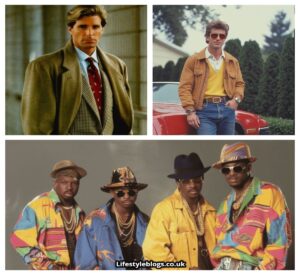
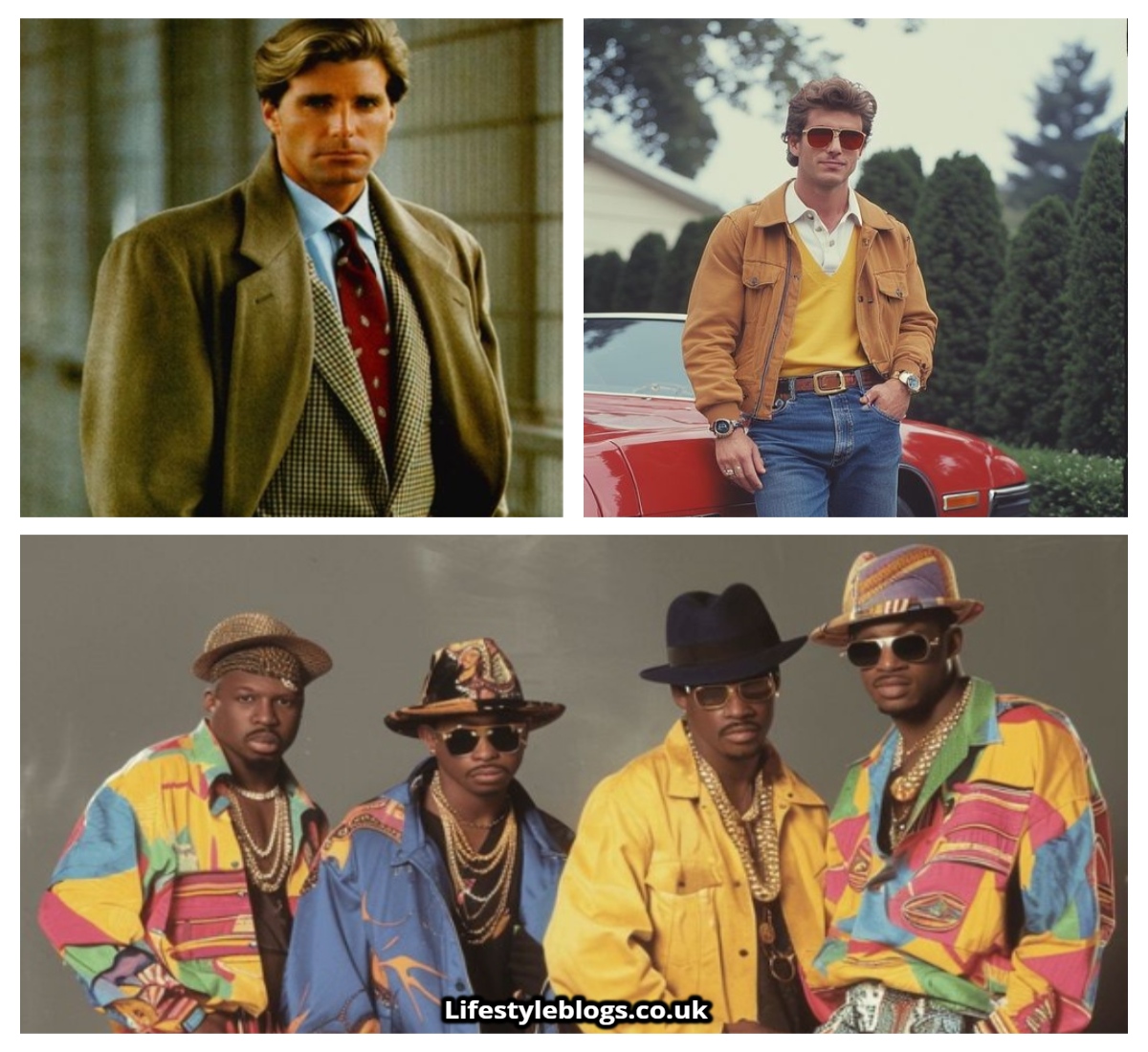
The 1980s were all about excess. More colour, more volume, more personality. Men dressed in ways previous generations never had. Suits had broader shoulders. Jeans had bolder washes. Even casual wear made a statement.
MTV launched in August 1981 and changed everything. For the first time, musicians became style icons overnight — beamed directly into living rooms across the US and UK. Fashion had never been this accessible or this influential.
Flicking through original issues of GQ UK from 1982 and 1983, one thing stands out immediately: unlike earlier decades where one dominant look was pushed every season, the early 80s was already showing readers multiple competing styles on the same page — power dressing alongside punk, preppy alongside New Romantic. This diversity was not accidental. It reflected genuine cultural fragmentation, and it made 80s menswear richer than any decade before or since.
What made 80s men’s fashion truly unique was this diversity. There was no single look. A man could choose his tribe — the power dresser, the preppy, the punk rocker, the hip-hop head, the New Romantic — and dress accordingly. Each subculture had its own rules, icons, and wardrobe.
“The 1980s did not produce one men’s fashion — it produced eight of them, all running simultaneously, all absolutely convinced their own aesthetic was correct.”
How Pop Culture Shaped What Men Wore?

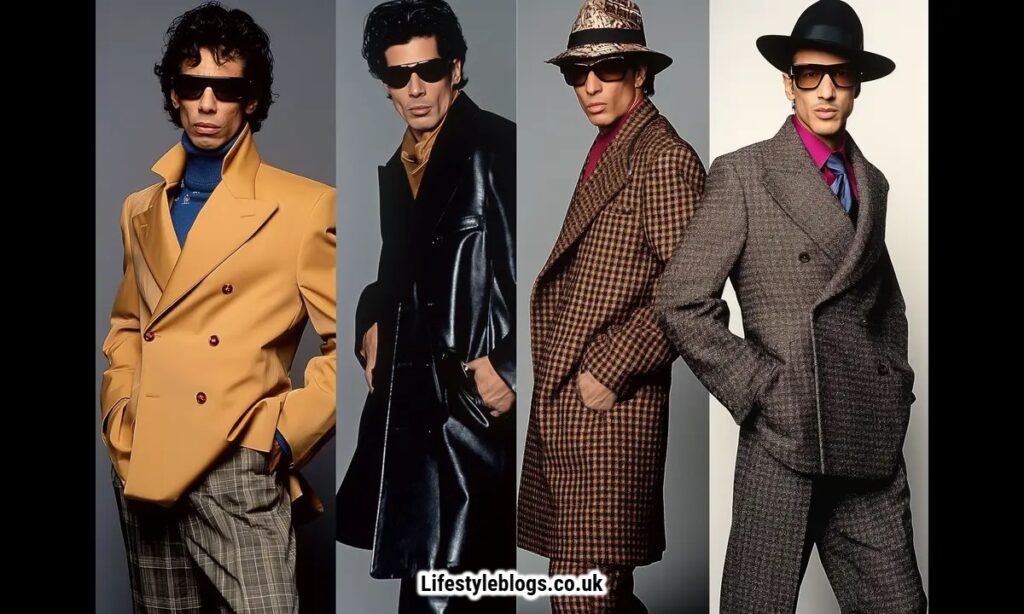
Television and cinema drove fashion in the 80s more than any magazine or runway. Miami Vice showed men that pastel suits worn without socks could be the coolest thing in the room. Top Gun made every man want a bomber jacket and aviator sunglasses. Michael Jackson’s Thriller music video turned a red leather jacket into the most coveted item of 1983.
Films like The Breakfast Club (1985) captured the full spectrum of 80s youth fashion in one frame — preppy, rebel, athlete, and outcast all sharing the same space. Ferris Bueller’s Day Off (1986) showed that casual 80s style could be effortlessly cool without trying too hard. These cultural moments did not just reflect fashion — they created it.
Why 80s Men’s Fashion Trends Are Back in 2026?

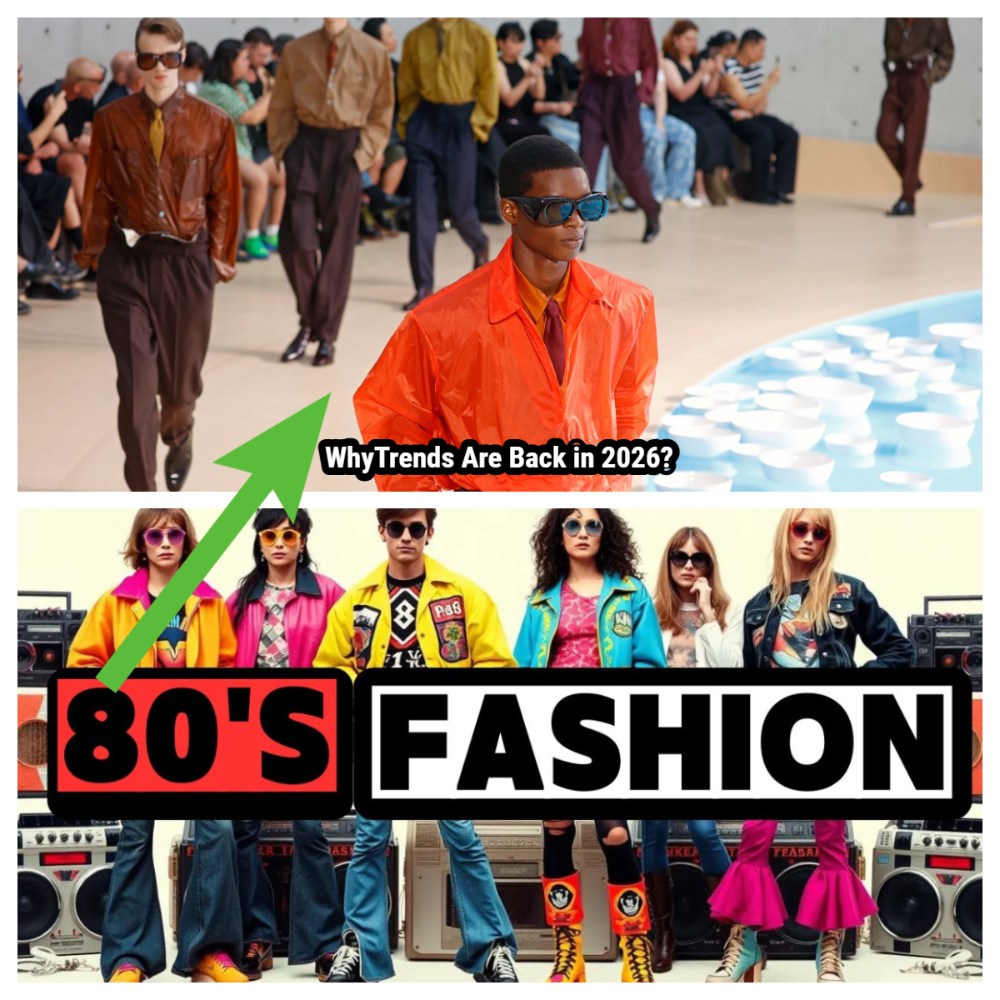
Fashion runs in roughly 40-year cycles, and right now we are firmly in the 80s revival era. Oversized blazers are back on the runways. Tracksuits never really left. High-top sneakers are a wardrobe staple. And the New Romantics aesthetic is influencing a whole new generation of designers.
The difference in 2026 is that men are approaching 80s fashion more selectively. Instead of head-to-toe retro, the modern approach is to take one or two key 80s pieces and blend them with contemporary styling. This guide will show you exactly how to do that.
How 80s Men’s Fashion Evolved Year by Year?
Most fashion articles treat the 80s as one uniform decade. It was not. The man who dressed well in 1981 looked completely different from the man who dressed well in 1988.
Early 80s (1980–1982): Still Shaking Off the 70s
The early years of the decade were transitional. Many men were still wearing the flared trousers and earth tones of the late 70s. The disco era was dying, punk had peaked, and fashion was searching for its next identity.
Power dressing was beginning to emerge in corporate America and the City of London, but it had not yet reached its full excess. Jeans were straightening out from their 70s flares. Polo shirts were gaining traction. The fitness craze was just beginning, and tracksuits were starting to cross from the gym to the street.
In the UK, the New Romantics movement was born in the London club scene around 1980-1981, with Boy George and Culture Club, Duran Duran, and Spandau Ballet defining a look that was theatrical, androgynous, and completely unlike anything America was doing at the time.
Mid 80s (1983–1985): Peak Power Dressing and the Thriller Era
By 1983, the 80s had fully found its identity. Giorgio Armani suits with wide shoulders were everywhere. Richard Gere had worn Armani in American Gigolo (1980) and every businessman in New York and London wanted the same effortless elegance.
Michael Jackson released Thriller in late 1982, and the red leather jacket became the most talked-about fashion item of the following year. Miami Vice debuted in September 1984, immediately making pastel suits and sockless loafers the uniform of cool. The Breakfast Club and Back to the Future both released in 1985, cementing multiple 80s style archetypes into popular culture forever.
In the UK, Duran Duran were at the peak of their fame, their New Romantic style influencing mainstream menswear across Britain. The Casual subculture was also growing on football terraces, with Stone Island and Adidas becoming the uniform of a uniquely British youth movement.
Late 80s (1986–1989): Athleisure Takes Over and Hip Hop Explodes
The second half of the decade saw a genuine shift in power. Hip-hop culture exploded into the global mainstream. Run-DMC released My Adidas in May 1986 and Adidas tracksuits became a global phenomenon almost overnight. The Beastie Boys brought hip-hop fashion to white suburban audiences. FILA, Nike, and Puma all saw their profiles rise enormously.
Top Gun released in May 1986 and reignited the bomber jacket trend. By the end of the decade, neon colours, graphic tees, and oversized everything had reached their peak. The 80s were burning brightly — and fashion was about to make a hard left turn into the grunge era.
1. Power Dressing: Suits, Shoulder Pads and Bold Colors
The Yuppie Culture: Dressing for Success

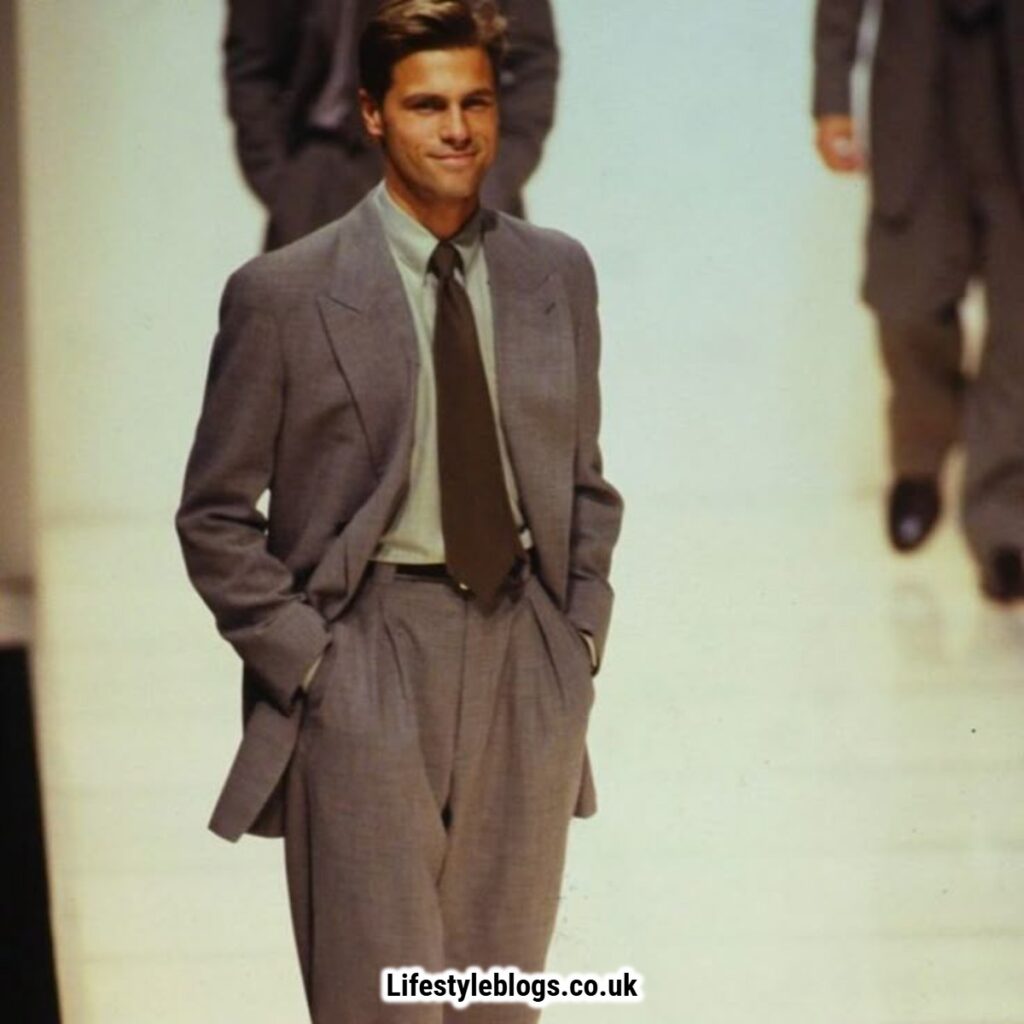
Power dressing was born from the yuppie culture of the 1980s. Young Urban Professionals in New York and London were earning more money than any previous generation of young people, and they wanted their clothes to reflect that success. The power suit — oversized, broad-shouldered, worn with confidence — was the uniform of ambition.
The signature of 80s power dressing was the shoulder pad. Jackets were cut wide and boxy to create a silhouette that projected authority. These were not subtle suits. They were statements. Worn with bold patterned ties, crisp oxford shirts, and polished dress shoes, the complete power dressing look said one thing: I have arrived.
Giorgio Armani, Richard Gere and American Gigolo

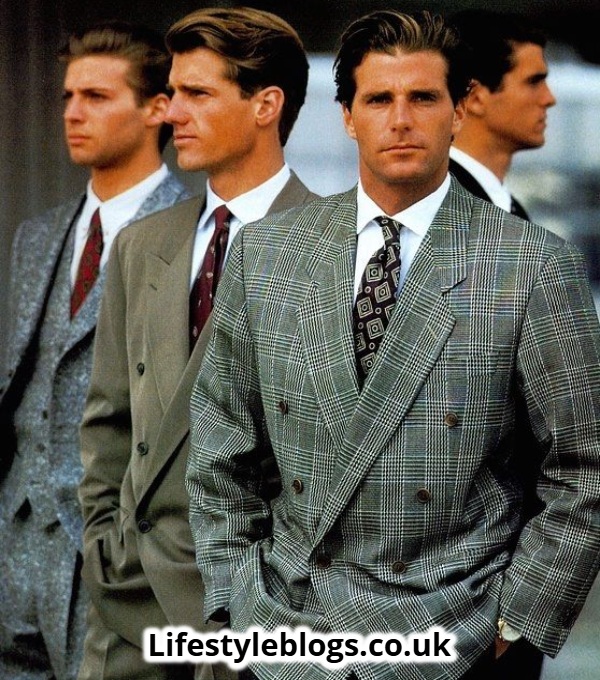
No designer defined 80s men’s power dressing more completely than Giorgio Armani. When Richard Gere wore Armani throughout American Gigolo (1980), it changed menswear permanently. Armani’s suits were unstructured, fluid, and luxurious without being stiff. They draped rather than sat.
Armani himself described his philosophy in words that perfectly capture the decade: “I was the first to soften the image of men, and harden the image of women. I dressed men in women’s fabrics, and stole from men what women wanted and needed — the power suit.”
Understanding how Armani changed menswear forever helps explain why the 80s power suit looked so revolutionary. Hugo Boss rose alongside Armani, offering European-cut power suits that were popular across the City of London. Versace added colour and drama to the formula — bold patterns and bright hues that were entirely, unapologetically of their time.
Pinstripe Suits, Oxford Shirts and Oversized Blazers

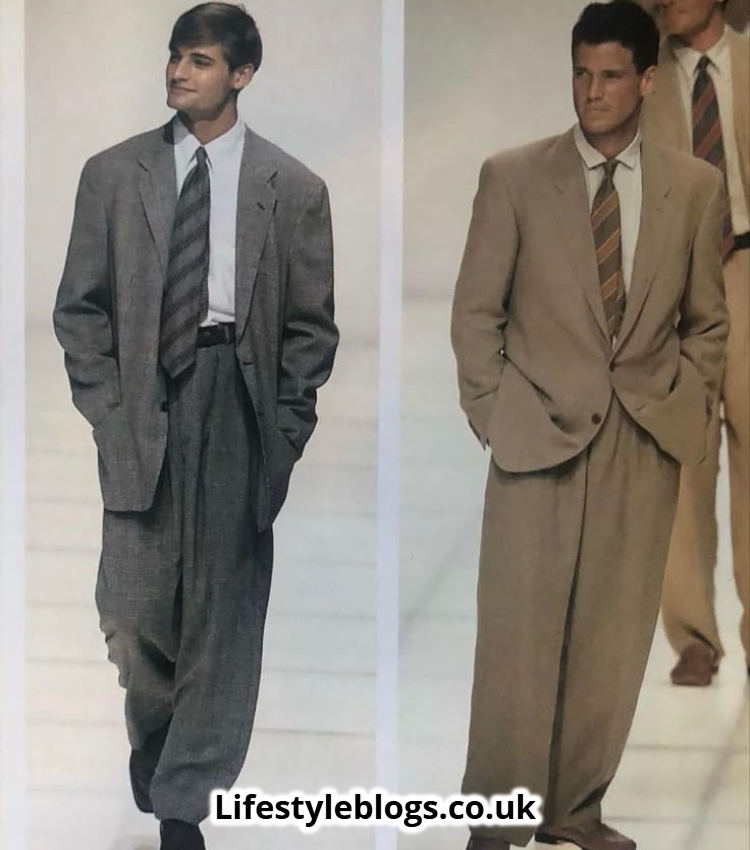
Away from the designers, pinstripe suits became the everyday uniform of the 80s office worker. Blue and grey on white were the classic combinations, though adventurous men opted for pink or bright yellow pinstripes. Oxford shirts in pale colours — white, powder blue, light green — were the standard pairing.
Oversized blazers worn casually over a t-shirt, with jeans, without a tie, became the defining look of 80s smart-casual dressing. Young men wore unlined sport coats this way, creating a relaxed sophistication completely different from the stiff formality of previous decades.
Miami Vice Effect: Pastel Suits, Rolled Sleeves and Sockless Loafers

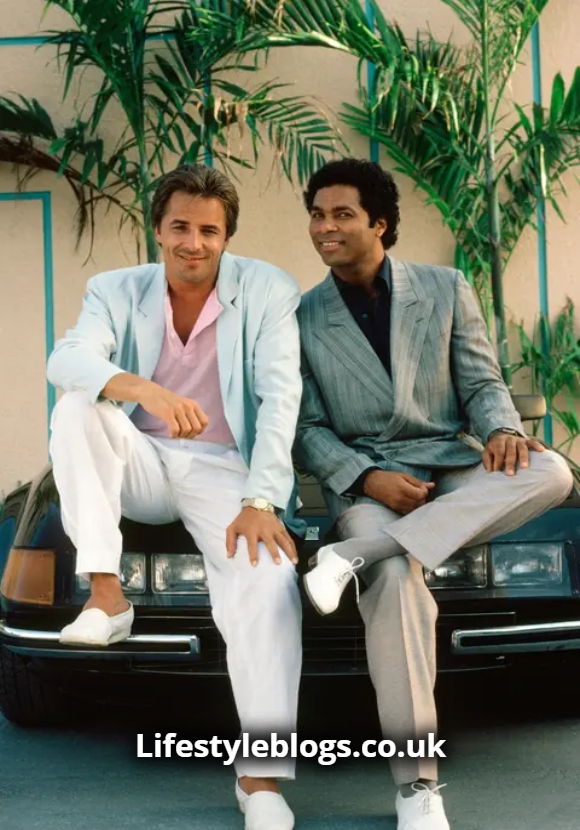
When Miami Vice debuted in September 1984, it changed menswear overnight. Don Johnson’s Sonny Crockett wore a pastel blazer in pink, blue, or yellow over a coloured t-shirt, with white trousers and loafers worn without socks.
The rolled sleeve technique — pushing jacket sleeves up to the elbow — became a universal 80s style move. It gave even the most formal blazer a relaxed, confident energy. The sockless loafer completed the look perfectly — casual enough to feel effortless, smart enough to hold the look together.
Hugo Boss and the European Power Suit

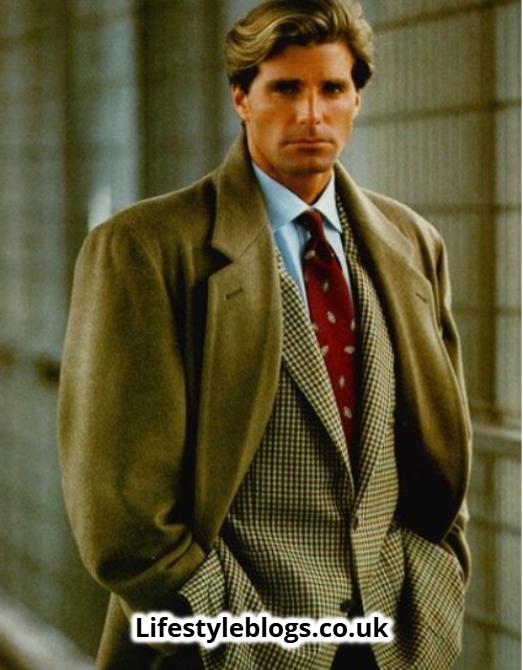
While American power dressing favoured the Armani approach, British men — particularly in financial services — gravitated toward Hugo Boss. Boss suits in the 80s were sharply constructed with clean lines and a distinctly European confidence, giving UK power dressing a slightly different flavour from its American counterpart.
How to Wear Power Dressing in 2026?

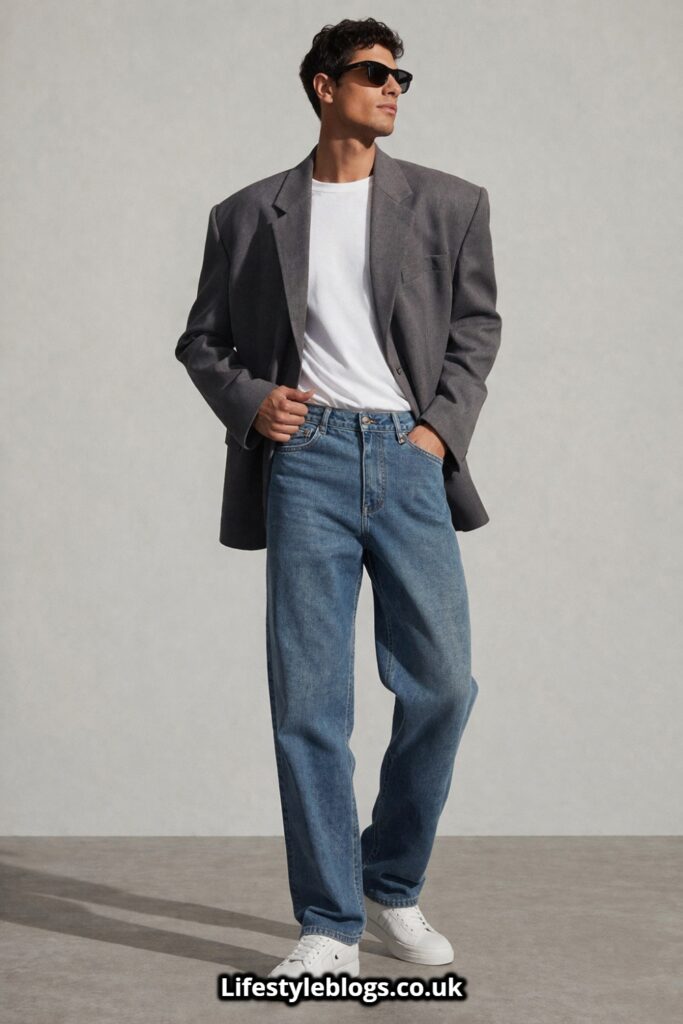
The key is restraint. Take one element — the oversized blazer — and wear it with contemporary pieces. A wide-shoulder blazer over a plain white t-shirt with straight-leg jeans and clean trainers is a completely modern outfit that carries genuine 80s energy. Skip the shoulder pads. Keep the confidence.
2. 80s Preppy Style for Men
The Ivy League Look: Polo Shirts, Khakis and Boat Shoes
The preppy look drew directly from American Ivy League university culture — or more precisely, from the aspirational fantasy of that tradition. Polo shirts with popped collars, well-fitted khaki trousers, and Sperry boat shoes worn without socks were the core pieces.
Pastel colours replaced the earth tones of the 70s — mint green, baby pink, powder blue, lemon yellow. The whole aesthetic communicated summer at a yacht club, weekends at the country club, and effortless success.
Ralph Lauren, Lacoste and IZOD: The Preppy Brands
Ralph Lauren’s Polo brand and Lacoste were the twin pillars of 80s preppy fashion. The polo player logo and the crocodile were shorthand for an entire aspirational lifestyle. IZOD was the more accessible version — the brand that brought preppy style to a wider audience at a more affordable price.
Tennis Sweaters, Cardigans and the Sweater-Over-Shoulders Look
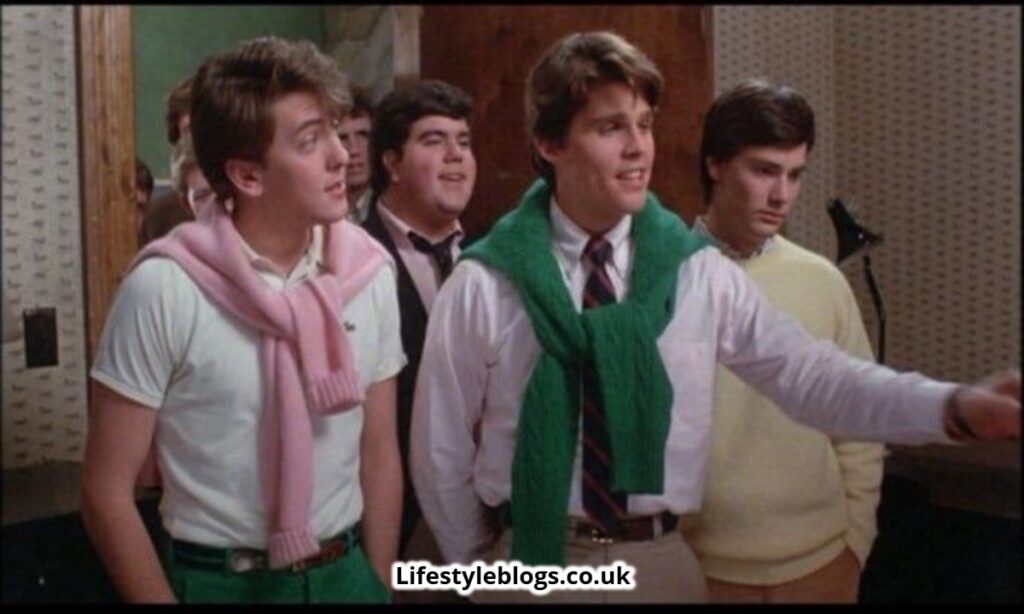
Chunky knit sweaters — cable knit, argyle, and Fair Isle patterns — were worn over collared shirts for a polished but relaxed effect. The tennis sweater, with its v-neck and contrasting striped ribbing, was a staple of the preppy wardrobe on both sides of the Atlantic.
The sweater-over-shoulders look — tying a jumper around your neck with the sleeves draped over your chest — became the most recognisable preppy gesture of the decade. It was the kind of detail that only the truly style-conscious could pull off without looking like they were trying.
Ferris Bueller’s Casual Preppy Style: Wearable Everyday 80s
Matthew Broderick’s Ferris Bueller in the 1986 John Hughes film represented something important that most 80s fashion writing misses. This was the most wearable version of 80s men’s style — approachable, effortless, and applicable to real life. Boxy printed shirts, high-waisted trousers, casual layering. His look translates directly to 2026 with minimal adjustment.
British Preppy: How the UK Put Its Own Spin on the Look?
British preppy in the 80s drew from British public school tradition and country sports. Barbour jackets, moleskin trousers, brogues, and checked shirts gave UK preppy a more rural, heritage flavour. High street brands like Next and Burton Menswear made the look accessible for everyone.
How to Wear Preppy Style in 2026?

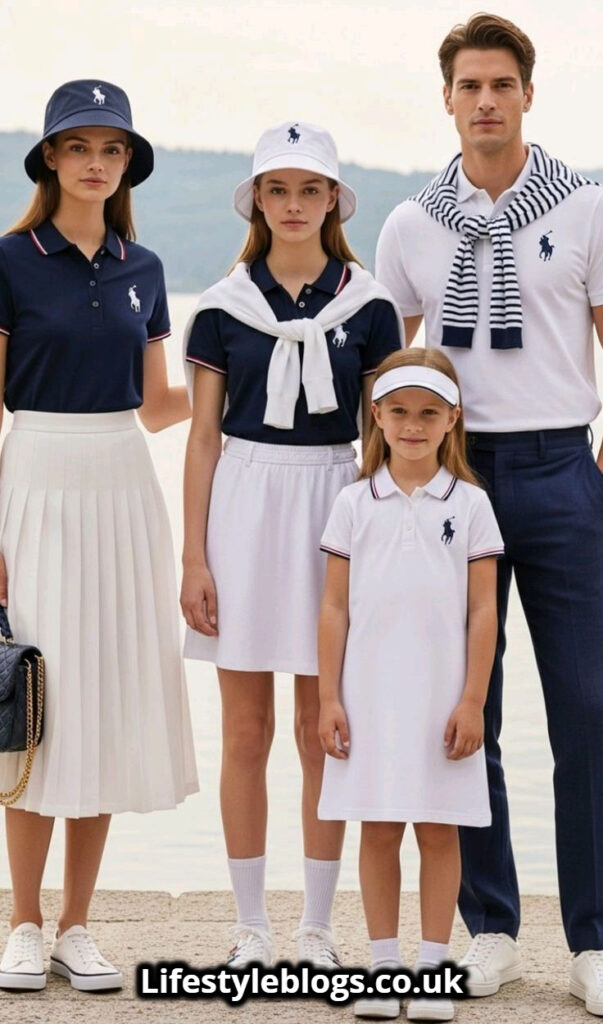
A classic polo shirt in a pastel colour with straight-leg chinos and clean white trainers is a completely contemporary outfit that carries genuine 80s preppy energy. The sweater-over-shoulders look is back on fashion runways right now.
3. Punk Rock and Heavy Metal Fashion
Leather Jackets, Ripped Jeans and Band T-Shirts

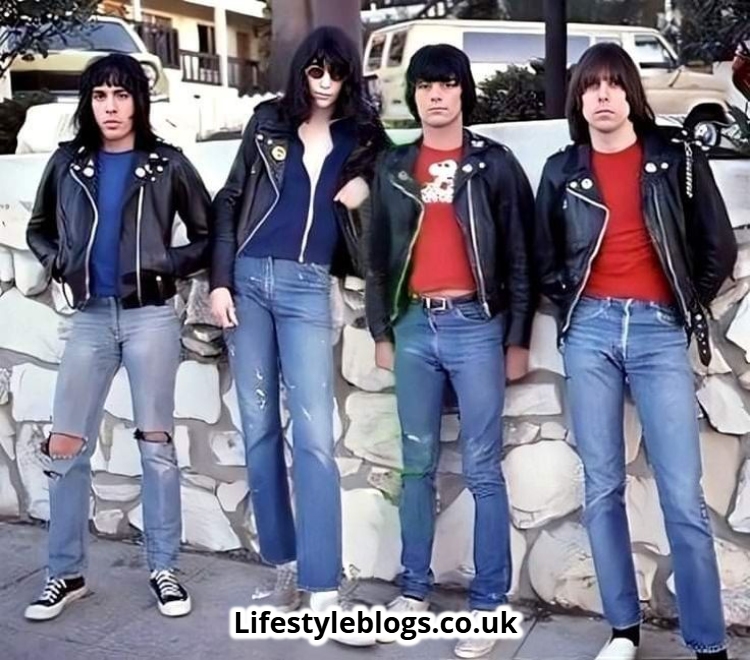
While power dressing and preppy were the establishment looks, punk rock and heavy metal offered the antidote. Fashion as rebellion — loud, aggressive, anti-establishment. The uniform was simple: a well-worn leather motorcycle jacket, ripped or acid wash jeans, and a band t-shirt featuring The Ramones, The Sex Pistols, or Mötley Crüe.
The leather jacket needed to be biker style — not clean, not new, but worn and broken in, ideally customised with studs and patches. Band t-shirts were bleached, torn, and treated as genuine fashion items rather than merchandise.
Studded Belts, Combat Boots and Mohawks
Studded belts, chains, and leather bracelets added an aggressive edge to every outfit. Combat boots — heavy, black, deliberately industrial — were the footwear of choice. Doc Martens were beginning their transition from punk subculture into mainstream fashion by the mid-80s.
The mohawk was the ultimate punk hairstyle statement. For those who wanted punk energy without the full commitment, spiky hair with an undercut was the more wearable alternative.
Glam Metal: Bon Jovi, Mötley Crüe and the American Rock Look
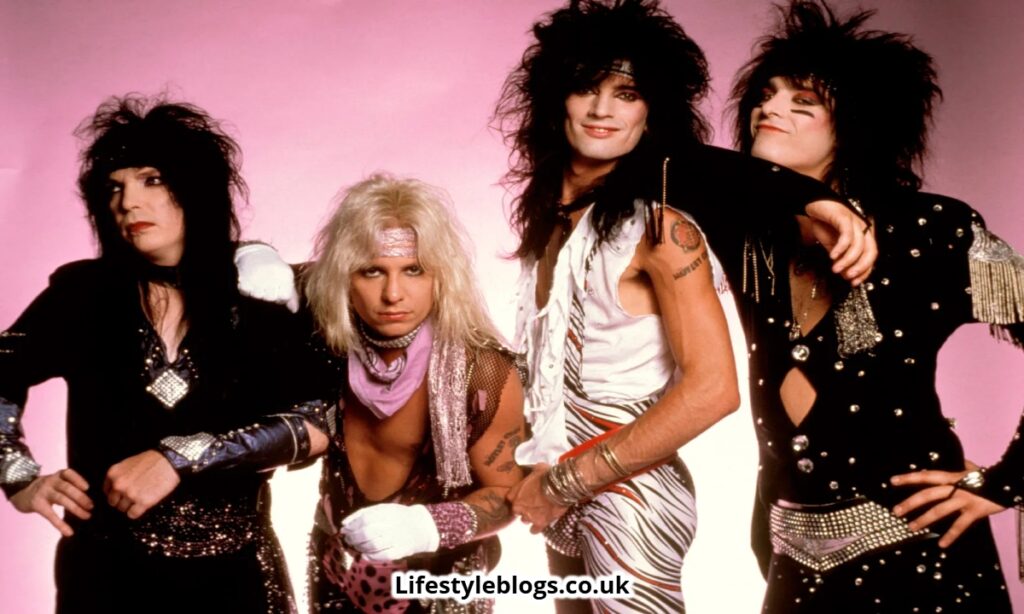
American glam metal took punk’s rebellious spirit and amplified it with theatrical glamour. Bon Jovi, Mötley Crüe, Guns N’ Roses, and Def Leppard created a fashion aesthetic that blurred gender lines. Tight leather or spandex pants, teased big hair, bold makeup, studded leather jackets — fashion as stage performance.
British Punk: The Clash, The Cure and the UK Punk Revival
British punk was rawer and more politically charged than its American counterpart. The Clash combined punk attitude with reggae influences and a working-class aesthetic. The Cure added post-punk darkness — black clothing, heavy eyeliner, a gloomy romanticism that influenced the emerging goth subculture.
Margaret Thatcher’s Britain gave British punk renewed political purpose in a way that American glam metal never had.
David Bowie: The Man Who Made Androgyny Fashionable
David Bowie’s influence on 80s men’s fashion cannot be overstated. His willingness to challenge gender norms through clothing gave an entire generation of men permission to experiment more freely with their appearance.
How to Wear Punk Rock Style in 2026?

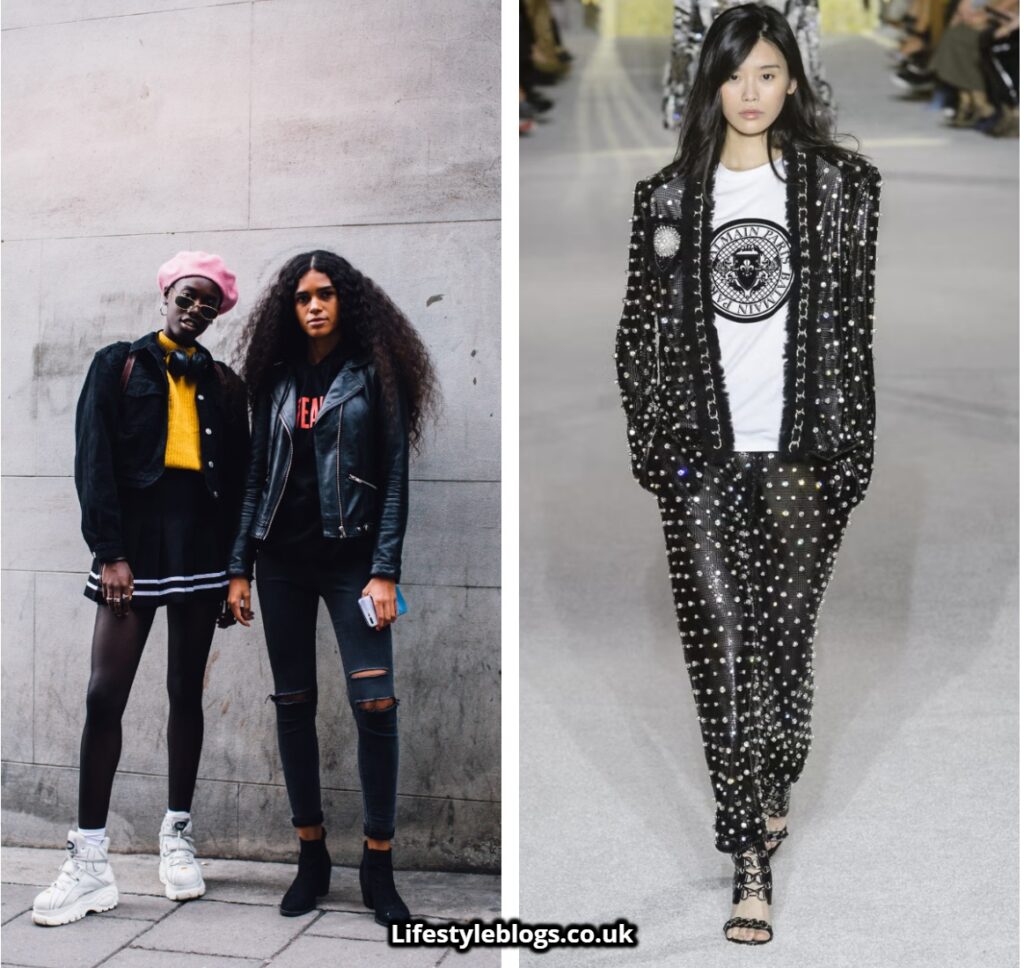
A leather jacket over a simple t-shirt with straight-leg jeans and white trainers is a contemporary look that carries genuine punk heritage. Skip the spandex and teased hair. Keep the leather jacket, keep the band tee, keep the boots.
4. New Wave and New Romantics: Britain’s Gift to 80s Fashion
What Was the New Romantics Movement?
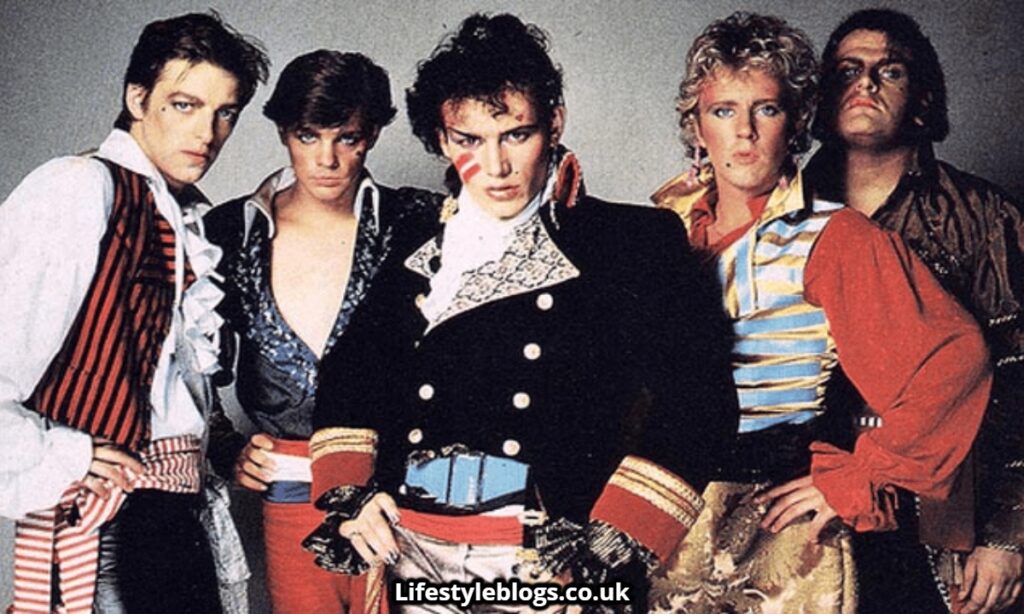
The New Romantic movement was born in the London club scene around 1979. It represented something genuinely unprecedented in men’s fashion — a theatrical, androgynous aesthetic with no equivalent anywhere in the world at the time.
The Blitz Club in Covent Garden was where it all started — a weekly club night where only the most flamboyantly dressed were admitted. Duran Duran, Spandau Ballet, and Culture Club developed their visual identities here. Understanding the Blitz Club is essential to understanding New Romantics fashion.
Where punk was about destruction and aggression, the New Romantics were about creation and fantasy. They drew inspiration from Regency dandies, pirates, and Renaissance courtiers, blending these references with synthetic fabrics, bold makeup, and hairstyles of extraordinary ambition.
Boy George and Culture Club: Gender-Bending Style
Boy George was the most internationally visible face of the New Romantics. His appearance — dreadlocks, heavy makeup, flowing robes, and complete disregard for conventional gender presentation — was genuinely shocking in 1982-1983. Culture Club’s enormous commercial success meant that Boy George’s image appeared on television screens and magazine covers around the world, bringing the New Romantics aesthetic to a global audience.
His impact on men’s fashion was profound. By demonstrating that a man could wear makeup, jewellery, and feminine clothing and still be a major cultural figure, Boy George expanded the boundaries of what men could wear — boundaries that are still being explored in 2026.
Duran Duran: Skinny Ties, Trench Coats and Fedora Hats

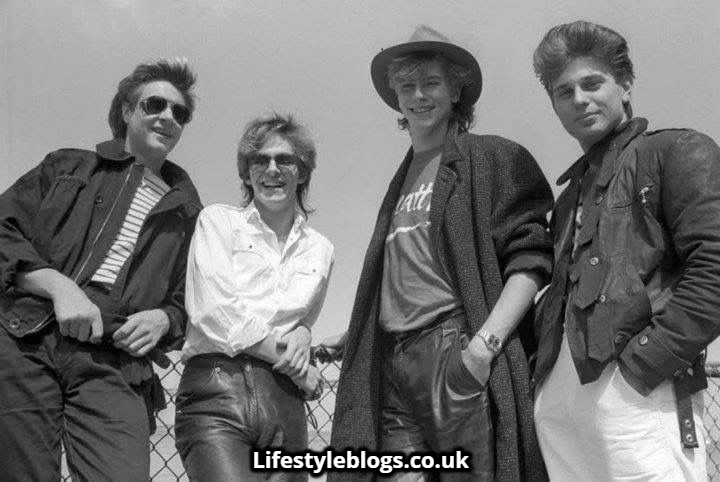
Where Boy George represented the extreme end of New Romantics style, Duran Duran offered a more wearable version. Skinny ties over collared shirts, trench coats, fedora hats, and sharp tailoring created a look that was sophisticated and slightly mysterious.
Nick Rhodes, Duran Duran’s keyboard player, was particularly influential in terms of pure fashion impact. His immaculate styling and attention to detail made him one of the most photographed men in Britain throughout the early 80s.
How New Wave Crossed the Atlantic and Hit America?
The New Romantics movement was primarily British, but it crossed the Atlantic through MTV. When the channel launched in August 1981, British New Wave and New Romantic acts dominated its early programming. American audiences encountered Duran Duran, Culture Club, Spandau Ballet, and The Human League through MTV. The New Romantic fashion history in the UK is a fascinating study in how a club subculture becomes a global movement.
Braces, Suspenders and the Androgynous Dressing Trend

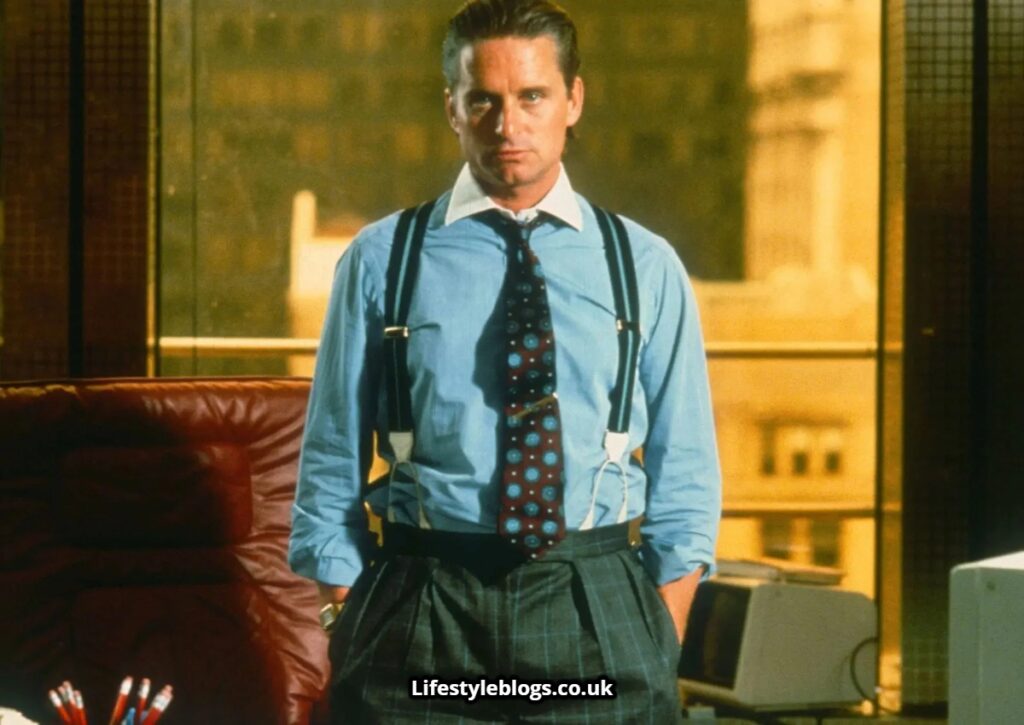
Braces or suspenders worn visibly over shirts were a signature New Wave fashion statement — deliberately worn as an accessory rather than hidden under a jacket. Often in bright colours over white or patterned shirts, this detail was borrowed from early 20th century dandy culture.
How to Wear New Wave Style in 2026?

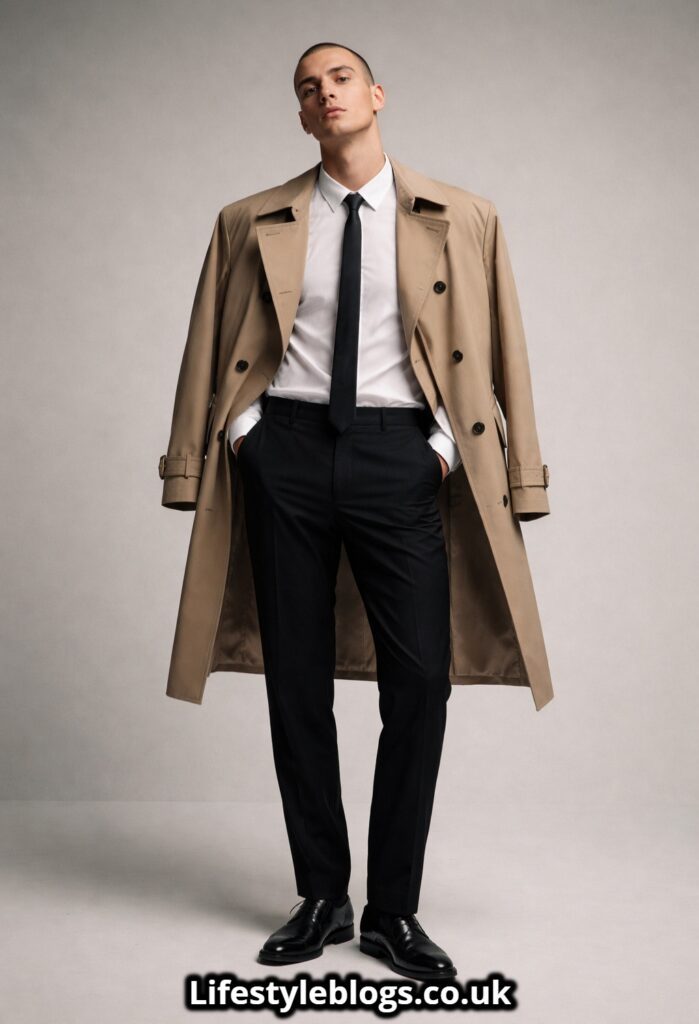
A skinny tie with a collarless shirt and well-cut trousers is a genuinely contemporary outfit that carries New Wave heritage. A trench coat over a simple outfit adds instant 80s New Wave energy without being costume-like.
5. Hip-Hop Fashion: Where Streetwear Was Born

From the Bronx to the World
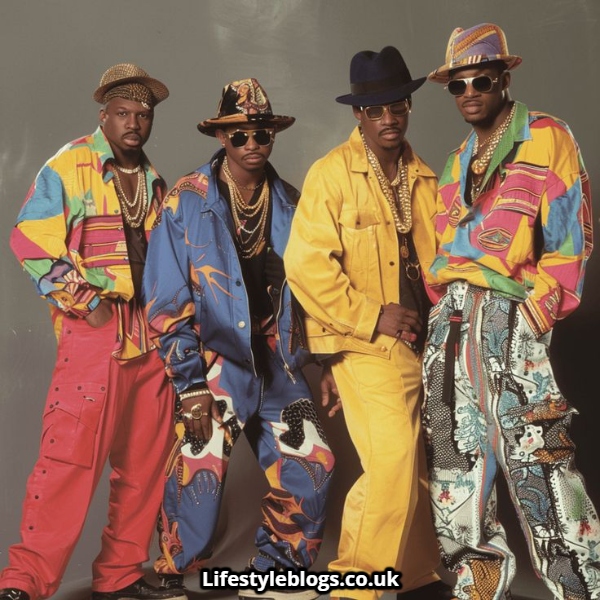
Hip-hop fashion emerged from the South Bronx in the late 1970s and exploded into global consciousness during the 1980s. It grew organically from the streets — not from designers or runways — and permanently changed the way men dress. Every element of streetwear culture in 2026 traces directly back to the hip-hop fashion of the 80s.
Run-DMC, Adidas Superstars and the Laceless Revolution
Run-DMC’s 1986 track My Adidas was not just a song — it was a cultural turning point. The group wore Adidas Superstar sneakers without laces as a deliberate style statement. What followed was remarkable. The full story of how Run-DMC earned their Adidas stripes — from a spontaneous performance at Madison Square Garden to the first million-dollar music artist endorsement deal in history — is one of the great stories in fashion business history.
As DMC himself said about the song: “It was a song that was about our sneakers, but it was bigger than just talking about how many pairs of sneakers we had.”
The impact of Run-DMC and Adidas on hip-hop fashion cannot be overstated. The Adidas tracksuit became the hip-hop uniform. This was athleisure before the word existed.
Beastie Boys, FILA and the Rise of Visible Branding
The Beastie Boys brought hip-hop fashion to white suburban audiences with a more eclectic, irreverent approach. FILA became particularly associated with this era, its bold logo and clean aesthetic making it a natural fit for hip-hop’s emphasis on visible branding.
The brand you wore communicated your taste, your awareness, and your cultural position. This principle has never left fashion, and is arguably more powerful in 2026 than at any point since the 80s.
Kangol Hats, Gold Chains and Snapbacks

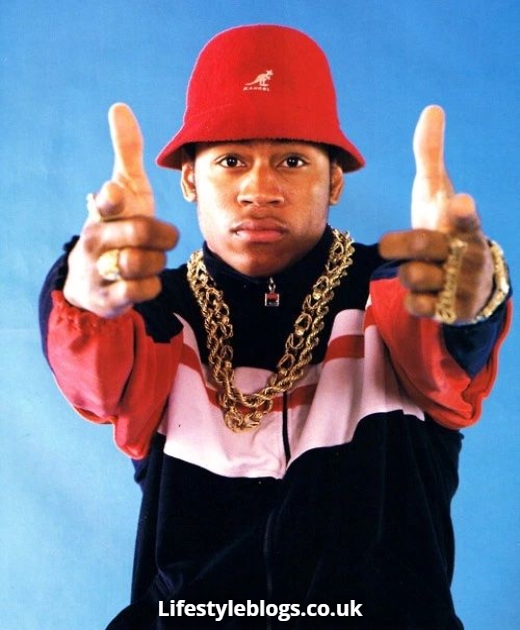
Kangol bucket hats, worn with a specific tilt by LL Cool J and others, became one of the most recognisable accessories of the decade. Gold chains — thick, heavy, worn in multiples — signalled success and status. Snapback baseball caps with mesh backs were a hip-hop staple throughout the decade.
How Hip-Hop Fashion Hit the UK Streets?
Hip-hop fashion arrived in the UK through import record shops, pirate radio, and television. By the mid-80s, British youth culture had absorbed many elements of American hip-hop fashion, blending them with existing subcultures. Adidas tracksuits sat alongside Stone Island, Reebok Classics, and the independently-developed Casual subculture growing on football terraces.
How to Wear 80s Hip-Hop Style in 2026?
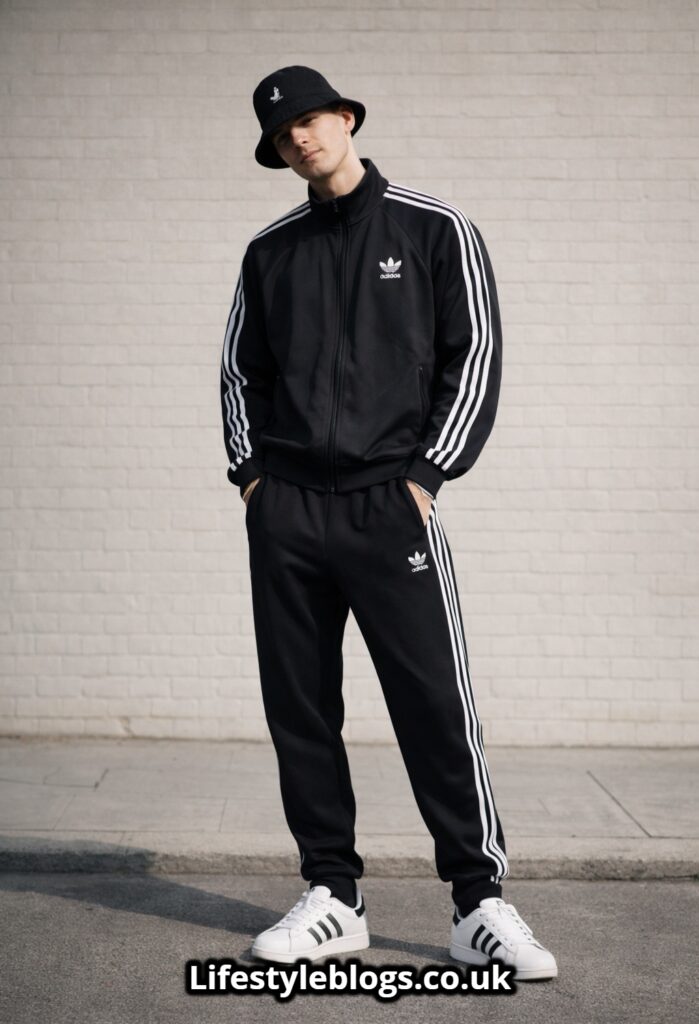
A matching Adidas tracksuit in a classic colourway with Adidas Superstars is a completely legitimate outfit in 2026. The silhouettes are correct, the brands are still relevant, and the energy is right. A Kangol hat worn casually adds an authentic 80s hip-hop reference without overwhelming a contemporary outfit.
6. The Casual Subculture: A Uniquely British 80s Trend

What Was the Casual Subculture?
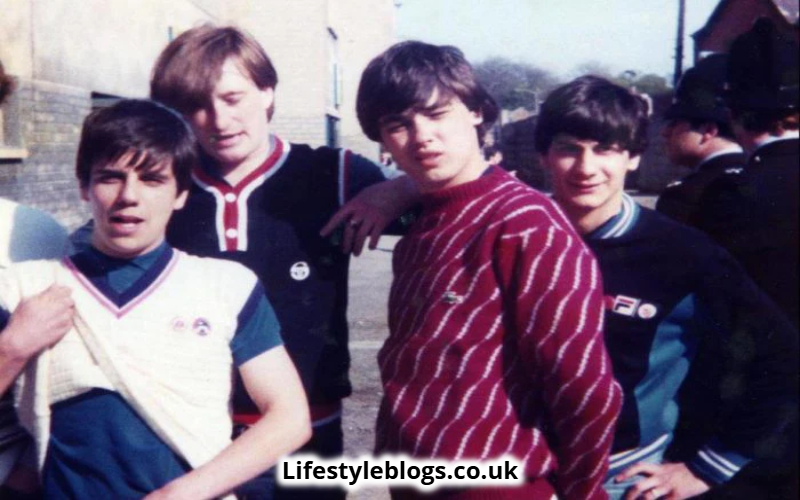
The Casual subculture was a distinctly British phenomenon that emerged from football terraces in the late 1970s and reached its peak in the early-to-mid 1980s. Unlike most 80s fashion movements — which drew from music or American culture — Casuals developed entirely within British working-class youth culture, producing one of the most influential menswear aesthetics in British fashion history.
The philosophy was quality over flash — wearing expensive, often European sportswear brands in a way that was knowing and cool without being obviously showy.
Stone Island, Adidas and the Football Terrace Look
Stone Island’s rise from football terraces to high fashion is one of the most fascinating brand stories in British fashion. Its distinctive compass badge worn on the arm became a mark of genuine style credibility among Casuals.
The story of how Casual terrace fashion developed is inseparable from English football’s European adventures in the late 70s and early 80s. British fans travelling to Italy brought back European sportswear — Stone Island, Fila, Ellesse, Sergio Tacchini — that nobody else in Britain had seen, and turned brand knowledge into social currency.
The overall Casual look was clean and precise — straight-leg jeans, a quality sportswear top or jacket, and pristine trainers. Hair neat, not spiky. Smart without being formal.
How Casuals Influenced British Men’s Fashion?
The Casual subculture’s influence on British menswear has been enormous and long-lasting. The emphasis on quality sportswear, the clean silhouette, and the knowing use of specific brands created a template that runs directly through 90s Britpop, the 00s streetwear explosion, and into the premium sportswear culture of 2026.
The Casual Look Today: Still Relevant in 2026
Stone Island remains one of the most covetable brands in British menswear in 2026. A clean Stone Island sweatshirt, straight-leg jeans, and Adidas Samba trainers is a completely contemporary outfit that carries direct heritage from the Casual subculture of the early 80s. The DNA is completely unbroken.
7. 80s Athleisure and Casual Style

Tracksuits, Windbreakers and Neon Colour Blocking
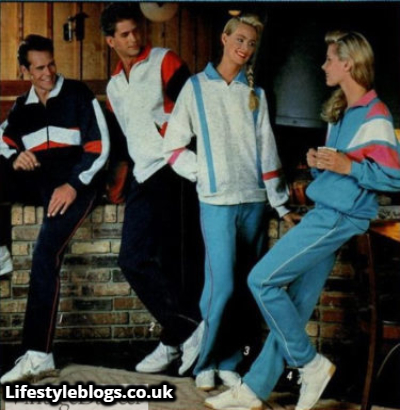
The fitness craze of the 1980s transformed athletic wear into everyday fashion on both sides of the Atlantic. Tracksuits moved from the gym to the street, windbreakers replaced traditional outerwear for casual wear, and neon colour blocking became the decade’s defining colour palette.
Tracksuits came in matching sets — jacket and trousers in the same colour or colourblocked design — made from nylon, cotton fleece, polyester, or velour. Adidas, Nike, Puma, and Reebok all produced tracksuits that became cultural touchstones. The bolder the colour, the better.
The Varsity Jacket: America’s Coolest Outerwear

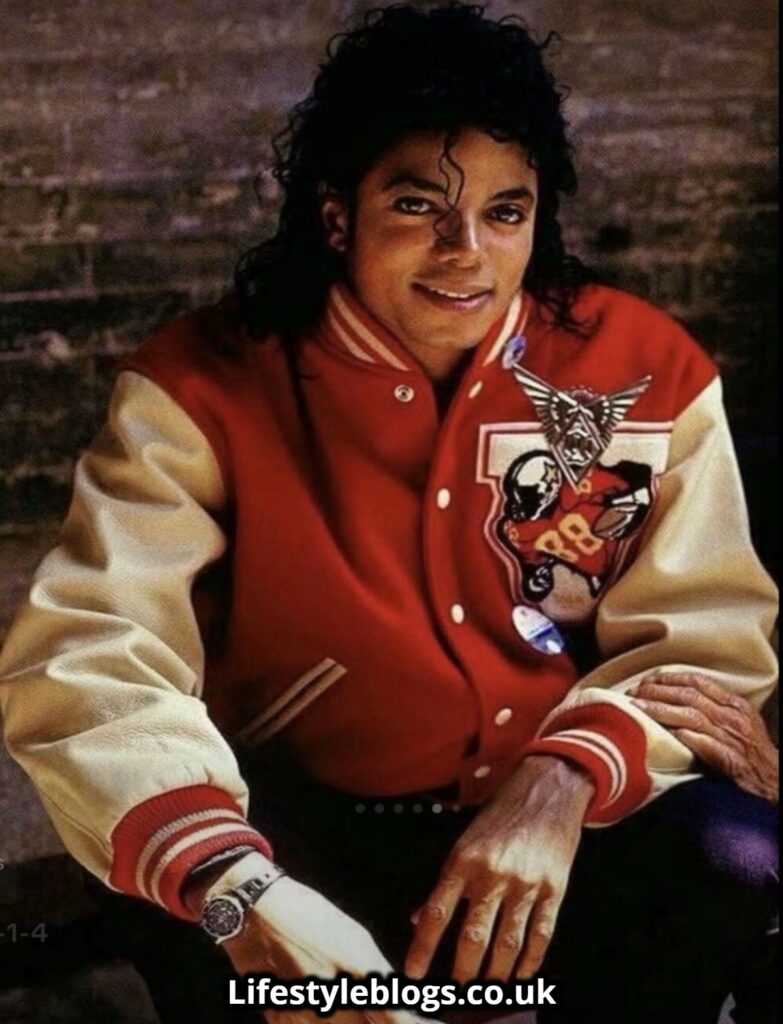
The varsity jacket — made of wool with leather sleeves, ribbed cuffs, collar, and waistband — was quintessentially American 80s style. Originally worn by high school and college athletes, it became a universal casual outerwear choice. Michael J. Fox wore one in Teen Wolf (1985), cementing its pop culture status permanently.
Members Only Jacket: The Most Iconic 80s Outerwear
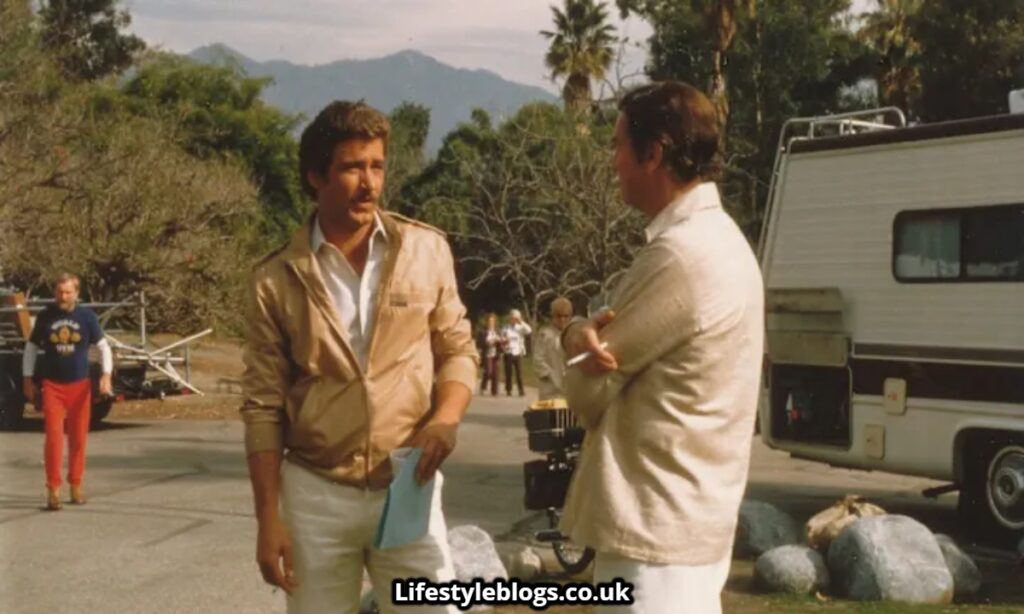
The Members Only jacket was everywhere in the early-to-mid 80s. Made by Europe Craft, it was a cross between a golf jacket and a European racing jacket — lightweight, with a distinctive ribbed collar, epaulettes on the shoulders, and a small label on the chest pocket. Burgundy was the most popular colour.
By the late 80s, the Members Only jacket had become so mainstream that wearing one was considered uncool — the ultimate fate of any fashion item that gets too popular. In 2026, its status as a genuine 80s artefact gives it renewed vintage appeal.
Bomber Jacket: Top Gun Changed Everything

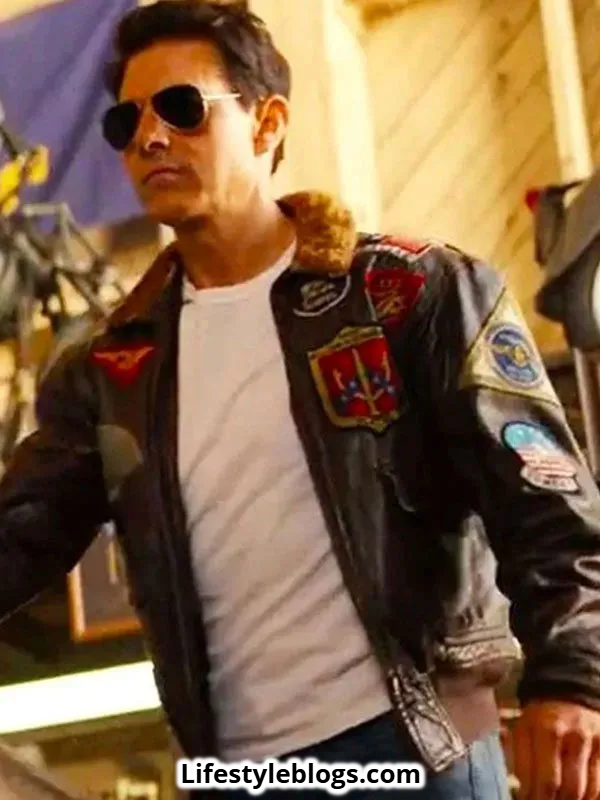
When Top Gun released in May 1986, Tom Cruise’s G-1 flight jacket became the most wanted piece of outerwear in America and the UK simultaneously. Alpha Industries’ own account of how Top Gun made bomber jackets famous confirms that the film drove a significant boost in sales that year — what the brand describes as a clear validation of the jacket’s “cool” factor among fashion-forward youth.
The surge was dramatic enough that the US Air Force, which had discontinued the G-1, reinstated the jacket for service members in 1988 — a direct consequence of the film’s cultural reach.
Grailed’s definitive history of Alpha Industries documents how Hollywood’s embrace of the bomber jacket was instrumental in keeping Alpha afloat when Department of Defense contracts were later cut.
Casual Cool Guy Look: Marty McFly to Steve Harrington
The most wearable version of 80s casual style was the everyday look worn by Marty McFly in Back to the Future (1985) — straight or slightly tapered jeans, a graphic tee or flannel shirt, a bomber or varsity jacket, and high-top sneakers. Simple, effective, completely transferable to 2026.
How to Wear 80s Casual Style in 2026?

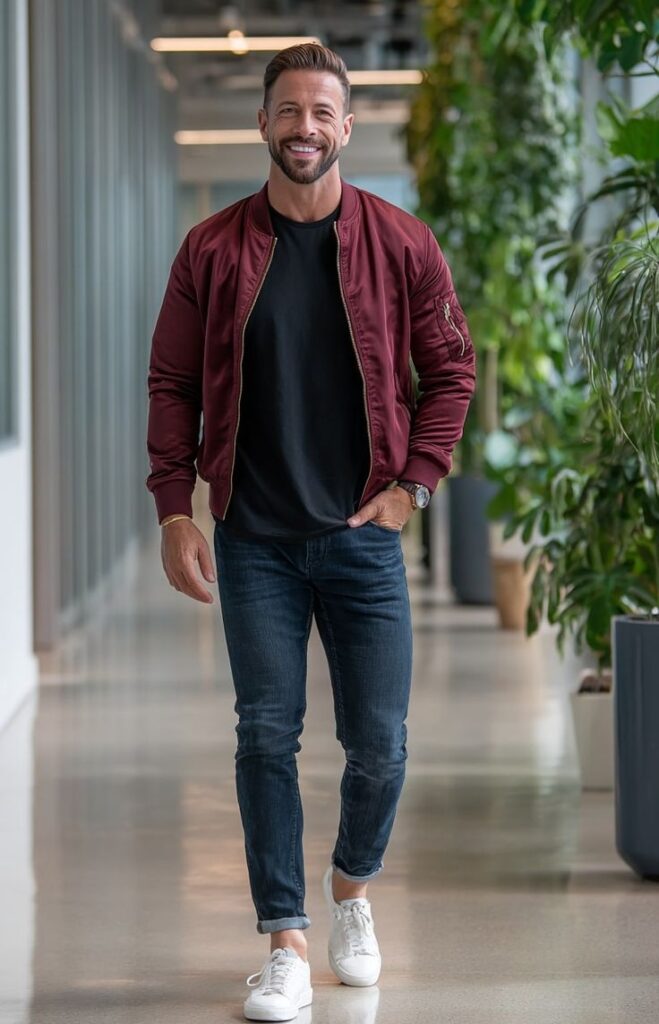
A bomber jacket over a graphic tee, with straight-leg jeans and high-top Converse, is a completely contemporary outfit in 2026. No adjustment needed — this combination works now as naturally as it did in 1986.
8. 80s Men’s Jeans and Denim

Acid Wash and Stone Wash Jeans: The Signature Look
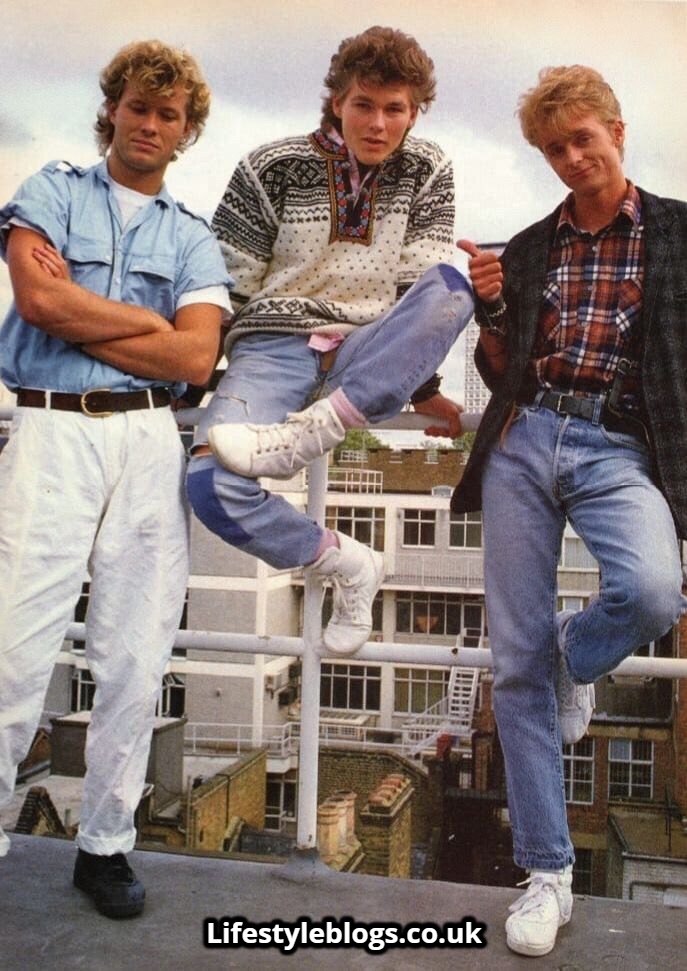
Nothing identifies 80s denim quite as immediately as acid wash. The treatment — pumice stones soaked in chlorine creating a marbled, bleached effect — became one of the most recognisable fabric treatments in fashion history. Levi’s, Calvin Klein, and Jordache all produced acid wash lines. The look was adopted by virtually every 80s subculture — from hip-hop to glam metal.
Examining original Levi’s advertising from 1984 and 1985, the acid wash styling is presented as aspirational and youthful — a deliberate break from the clean dark denim of previous decades. Stone wash was the more subtle version — softer, faded denim with a worn vintage look.
Pleated and High-Waisted Jeans
80s jeans were cut differently too. Pleated waistbands gave them a distinctive silhouette that was baggy through the seat and thigh. High-waisted cuts sat at or above the natural waist — a carry-over from 70s styling that persisted through most of the decade.
Double Denim: The Canadian Tuxedo
The Canadian tuxedo — a denim jacket worn with matching or coordinating denim jeans — was one of the most debated fashion choices of the decade. Polarising at the time, it has since been thoroughly rehabilitated and is considered a legitimate style move in contemporary fashion.
Parachute Pants and Hammer Pants
Parachute pants — slim-cut nylon trousers with multiple zippers — were popular in the early-to-mid 80s, particularly among breakdancers before crossing into mainstream fashion. Hammer pants, or harem pants, were much fuller through the seat and thigh. MC Hammer made them famous in his 1990 music video, making them more of an early 90s phenomenon that grew from 80s streetwear culture.
Top Denim Brands: Levi’s, Calvin Klein, Jordache and Guess
Levi’s remained the benchmark denim brand throughout the 80s — the 501 straight leg being the definitive everyday jean. Calvin Klein elevated denim to luxury status. Jordache and Guess targeted the fashion-conscious younger market. Wrangler and Lee remained popular with a more mainstream audience.
9. 80s Men’s Shirts and Tops
Polo Shirts and the Popped Collar

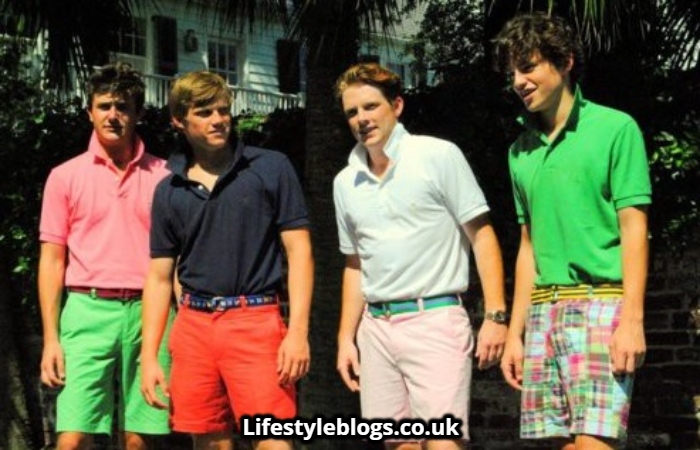
The polo shirt was the single most versatile piece in the 80s man’s wardrobe. Lacoste and Ralph Lauren Polo were the premium choices. IZOD offered the same aesthetic at a more accessible price point. The popped collar — worn up rather than flat — was one of the most characteristic gestures of 80s style. Horizontally striped polo shirts in rugby-style thick stripes were a staple across both the US and UK.
Hawaiian Shirts and Camp Collar Prints

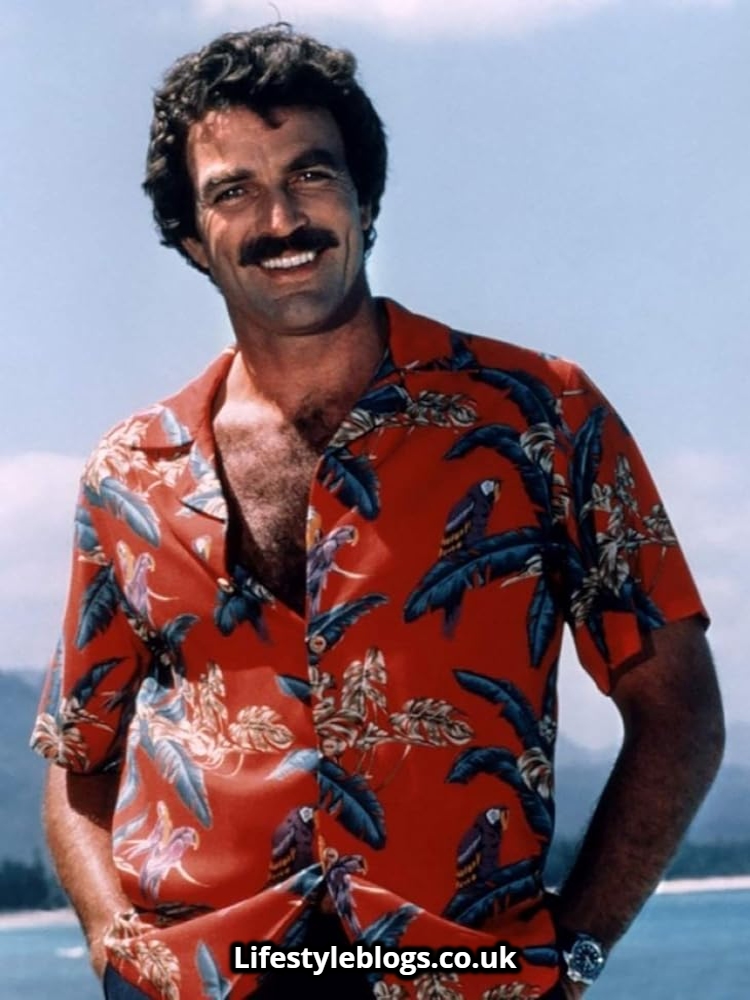
Hawaiian shirts had a significant moment in the 80s, particularly in summer. Tom Selleck wore them constantly in Magnum P.I., making them a mainstream choice rather than a beach-only item. The Weekend at Bernie’s (1989) aesthetic — bold printed shirts worn casually with light trousers — captured this perfectly. In 2026, the camp collar shirt has been thoroughly rehabilitated as a genuine fashion staple.
Western Plaid Shirts and Rugby Stripe Shirts
Western plaid shirts gained traction after Urban Cowboy (1980) brought cowboy culture into fashion — typically worn layered over a t-shirt, partially unbuttoned, with the collar up. Rugby stripe shirts bridged the gap between sportswear and smart-casual in a way that felt natural in British menswear.
Graphic Tees and Band T-Shirts
The graphic tee was the democratic garment of the 80s — worn by everyone from power dressers on weekends to punk rockers every day. Arnold Schwarzenegger wore one in Twins (1988). Band t-shirts featuring rock and metal groups were treated as genuine fashion items — bleached, torn, and customised.
Memphis Style Shirts: The Late 80s Statement

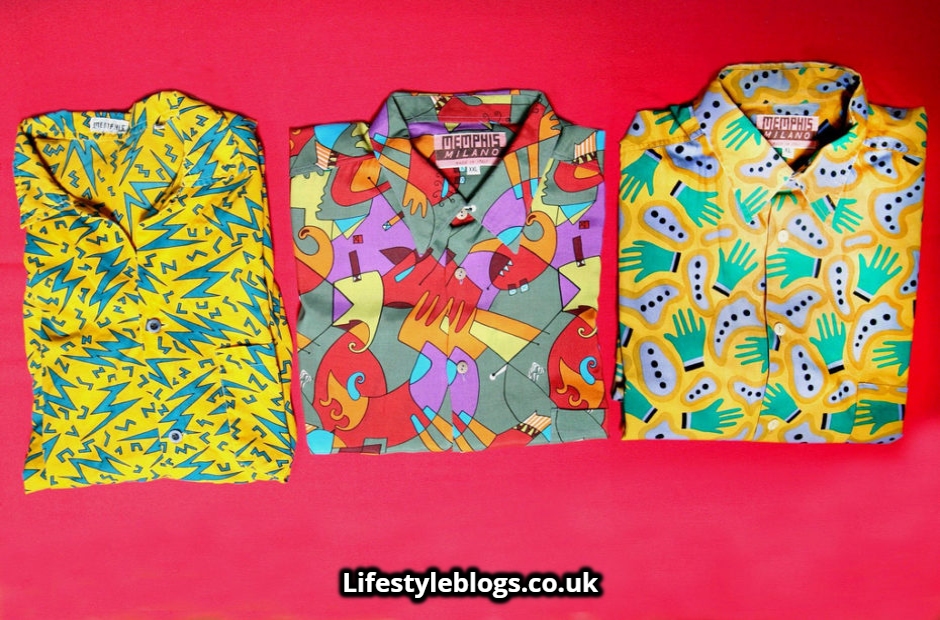
Memphis-style shirts — boldly patterned button-downs featuring abstract geometric shapes in black and white or neon colours — were a distinctive late-80s trend named after the Memphis design movement. Typically worn layered over knit shirts with sleeves rolled and collar flipped.
10. 80s Men’s Shoes and Sneakers
Nike Air Jordans: Michael Jordan Changed Everything
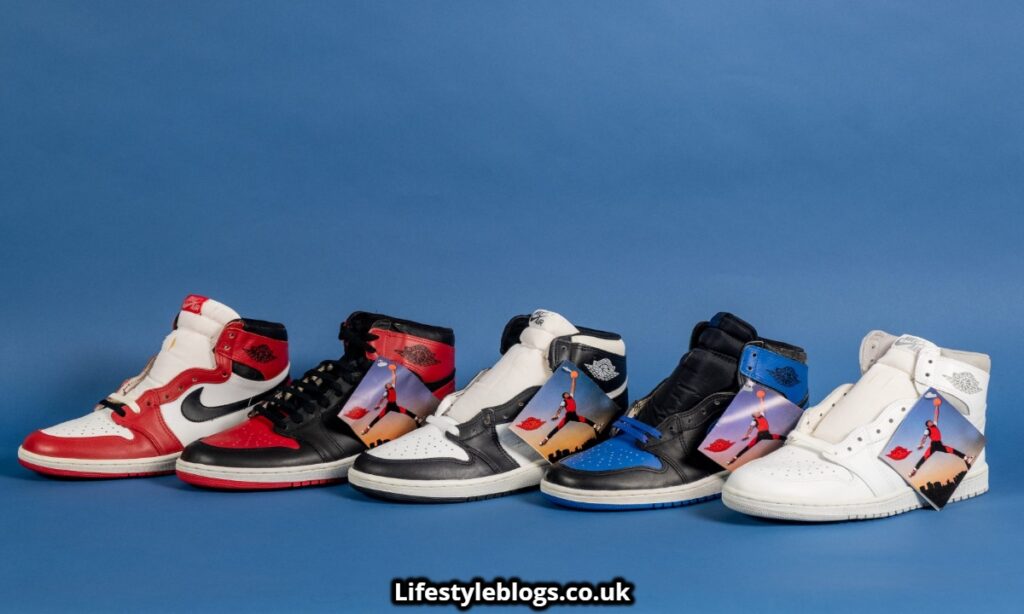
When Nike released the Air Jordan 1 in April 1985, it created a cultural moment still reverberating in 2026. The numbers are extraordinary: Nike projected $3 million in Air Jordan sales over three to four years. Instead, the shoe generated $126 million in its first year alone — more than 40 times the original projection. Nike sold 450,000 pairs in the first month alone.
As Michael Jordan’s agent David Falk confirmed to the NBA: “In the first year they sold $126 million worth. They outsold every basketball shoe in the first year.”
Understanding how Michael Jordan revolutionised the sneaker industry helps explain why the entire sneaker culture that generates billions today exists at all. As TIME magazine reported, the Air Jordan 1 became the sneaker of a generation in a way no shoe had before. The sneakerhead movement was born in this moment.
Adidas Superstars, Reebok Classics and Converse Chuck Taylors

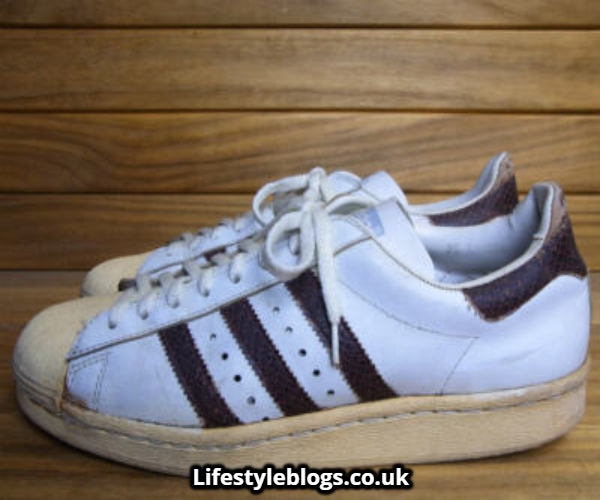
Adidas Superstars, with their distinctive shell toe, were immortalised by Run-DMC and remain among the most recognisable trainers ever made. Reebok Classics — clean, simple white leather trainers — were the athleisure shoe of the 80s, particularly popular in the UK. Converse Chuck Taylor All Stars were the casual choice for everyone — high-tops in white, black, or neon colours.
Vans: From Skate Shops to Street Style
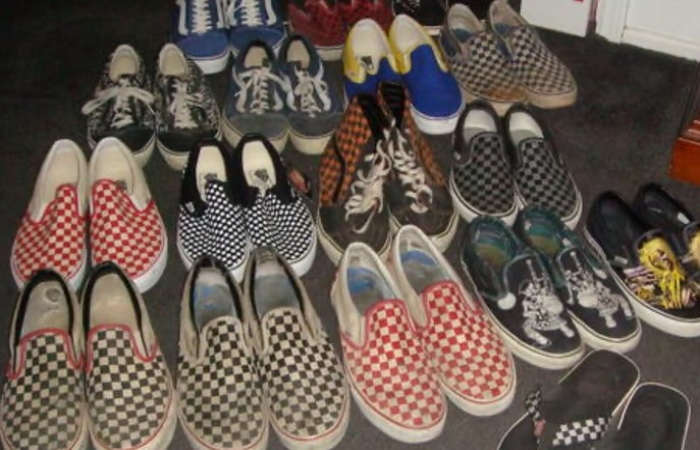
Vans gained mass cultural traction after Jeff Spicoli wore them in Fast Times at Ridgemont High (1982). The simple canvas shoe, previously the domain of California skateboarders, suddenly had a global audience. Checkerboard Vans became particularly iconic.
Boat Shoes, Penny Loafers and Ankle Boots

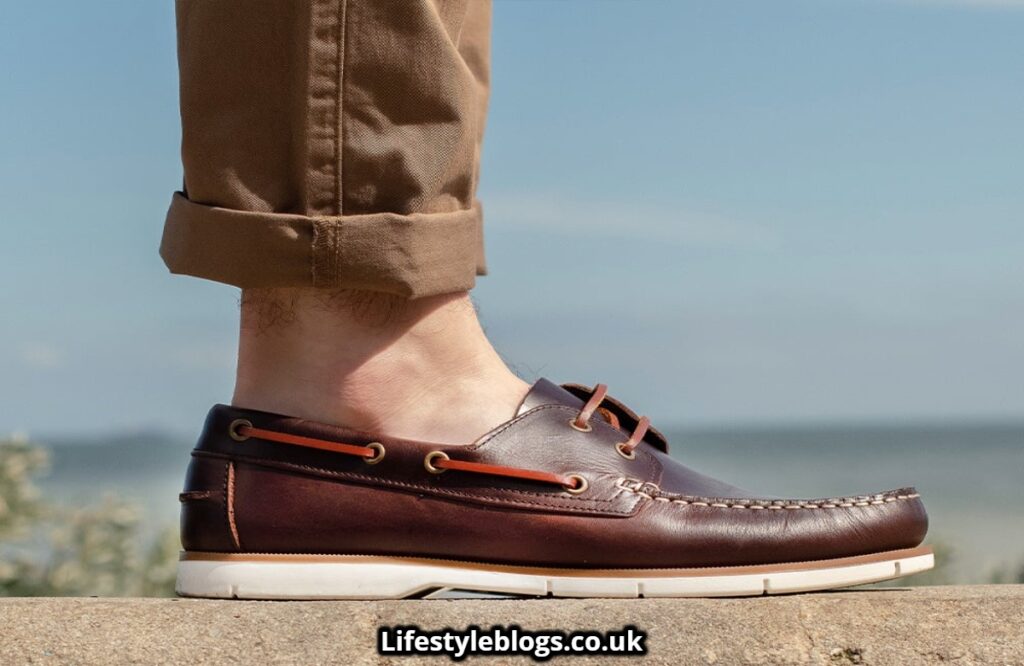
Sperry Top-Siders were the boat shoe of choice for preppy dressing, typically worn without socks. Penny loafers were the standard smart-casual shoe for men who wanted something more formal than a trainer. Ankle boots, often with a side zip, bridged casual and dressy effectively.
Western Boots and Combat Boots
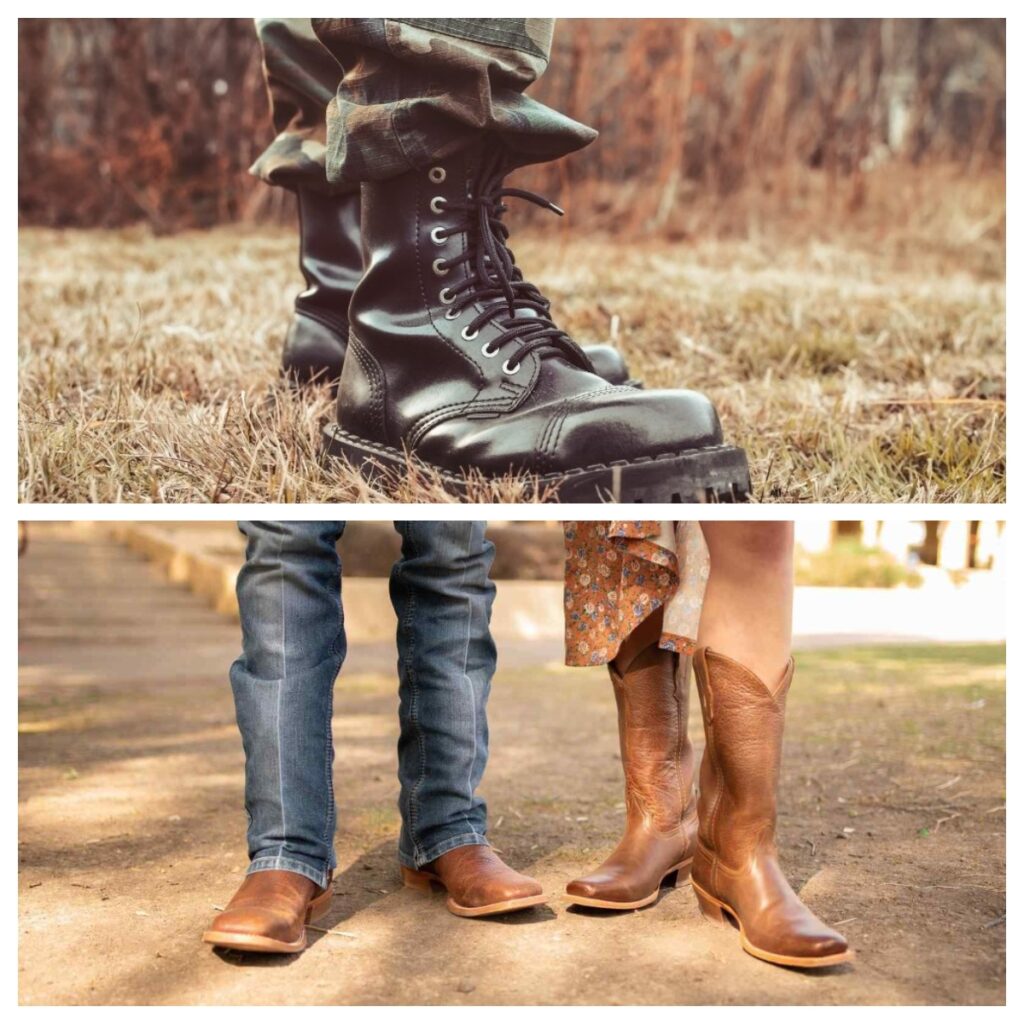
Western boots were a natural companion to the western plaid shirt trend. Combat boots — particularly Doc Martens — were beginning their transition from punk subculture into mainstream fashion during the late 80s.
11. 80s Men’s Accessories
Ray-Ban Wayfarers and Aviator Sunglasses
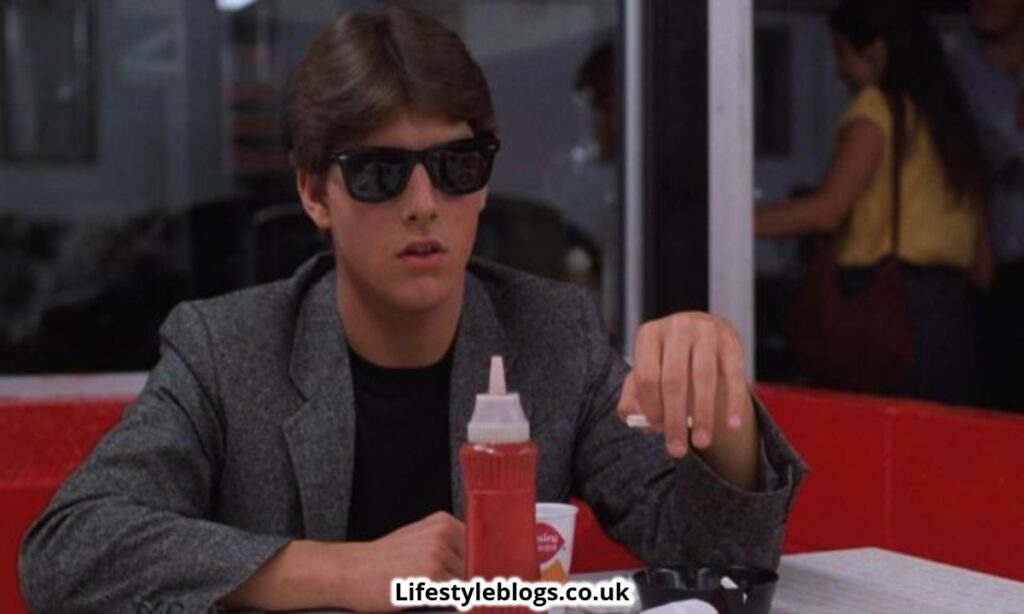
Ray-Ban Wayfarers are perhaps the single most iconic accessory of the 80s. Their profile was boosted enormously by Tom Cruise wearing them in Risky Business (1983) and their prominent placement throughout Miami Vice. Following Top Gun (1986), Ray-Ban Aviator sales increased by 40% — a direct and measurable example of cinema’s power over fashion.
Casio Calculator Watch: The Accessory That Defined a Generation
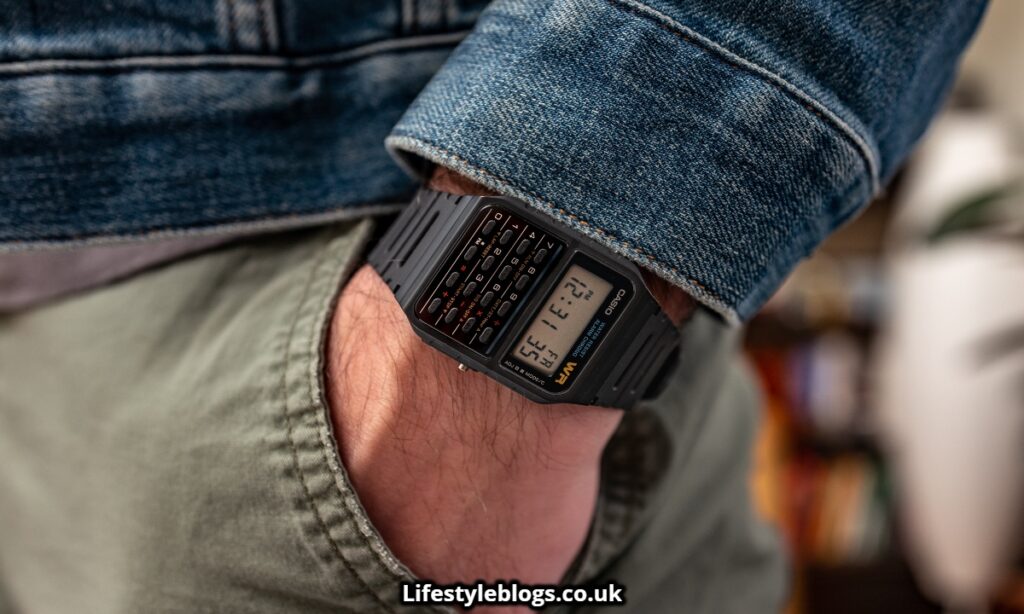
The Casio digital calculator watch captured its era completely. Functional, slightly geeky, and unmistakably of its time, it appeared on the wrist of Marty McFly in Back to the Future and became a cultural symbol of 80s technological optimism. In 2026, it has been thoroughly rehabilitated as a vintage accessory with genuine nostalgic appeal.
Swatch Watch: Cool Style on a Budget
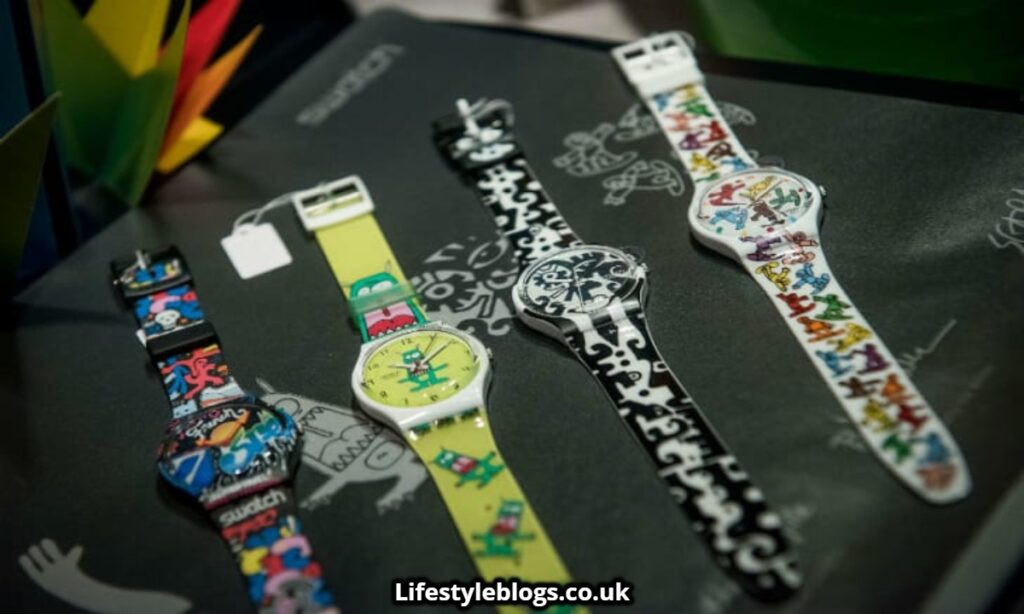
The Swatch watch was the fashion-forward alternative to the Casio. Colourful, playful, and deliberately disposable, Swatch watches came in hundreds of designs and were often collected and worn in multiples. They were the ultimate expression of 80s consumer culture.
Gold Chains, Rings and Enamel Pins
Gold chain necklaces — thick rope or herringbone style — were central to hip-hop fashion and crossed into mainstream men’s accessories. Large pendants, medallions, and oversized rings added to the gold-heavy aesthetic. Enamel pins worn on jacket lapels were a way of personalising outerwear.
Belts, Suspenders and Skinny Ties
Belts were a dominant accessory in the 80s — virtually every outfit included one. Suspenders or braces, worn visibly over shirts in the New Wave tradition, were a bolder accessory choice. Skinny ties — narrow, often in unusual fabrics — were central to the New Wave look.
Kangol Bucket Hat, Trucker Hat and Sweatbands
The Kangol bucket hat, associated particularly with LL Cool J, was one of the most recognisable accessories of the decade. Trucker hats with mesh backs displaying sports team logos were a mainstream casualwear choice. Terry cloth sweatbands — worn on the wrist or forehead — were both functional and fashionable during the fitness craze.
12. 80s Men’s Hairstyles
Understanding 80s men’s hairstyles is essential to completing the 80s look – hairstyles were treated with the same seriousness as clothing.
The Mullet: Business in Front, Party in Back

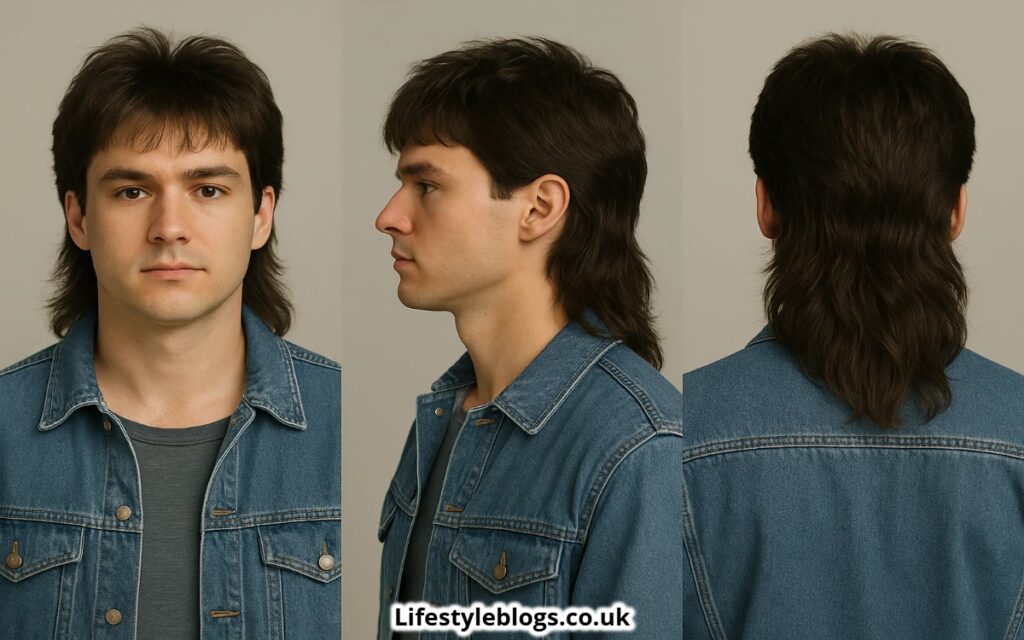
The mullet — short on the top and sides, long at the back — represented the decade’s contradictions perfectly. Professional enough for work, wild enough for the weekend. Billy Ray Cyrus and MacGyver wore their mullets with conviction. In 2026, the mullet has made a genuine comeback in its shorter, more contemporary iterations.
Spiky Hair: Billy Idol and the Punk Look

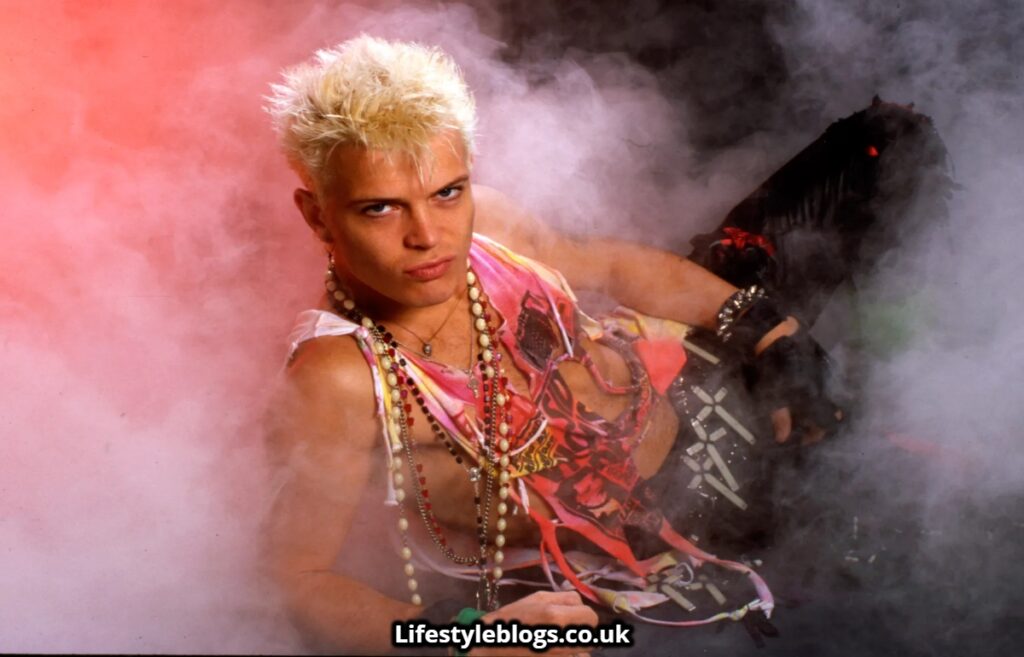
Spiky hair — achieved with generous amounts of gel or mousse — was the punk and New Wave hairstyle choice. Billy Idol wore his bleach-blond spikes with defiant confidence. Creating genuine 80s spiky hair required significant product and maintenance — it was a deliberate daily commitment.
Side-Parted Hair: The Classic Clean Look
The side-parted hair with a clean comb-over was the standard smart choice for men who preferred something conventional. River Phoenix wore this style with a naturalness that made it feel effortless. The hairstyle of choice for power dressers and preppy men alike.
Perms and Big Hair: The Rock Star Volume

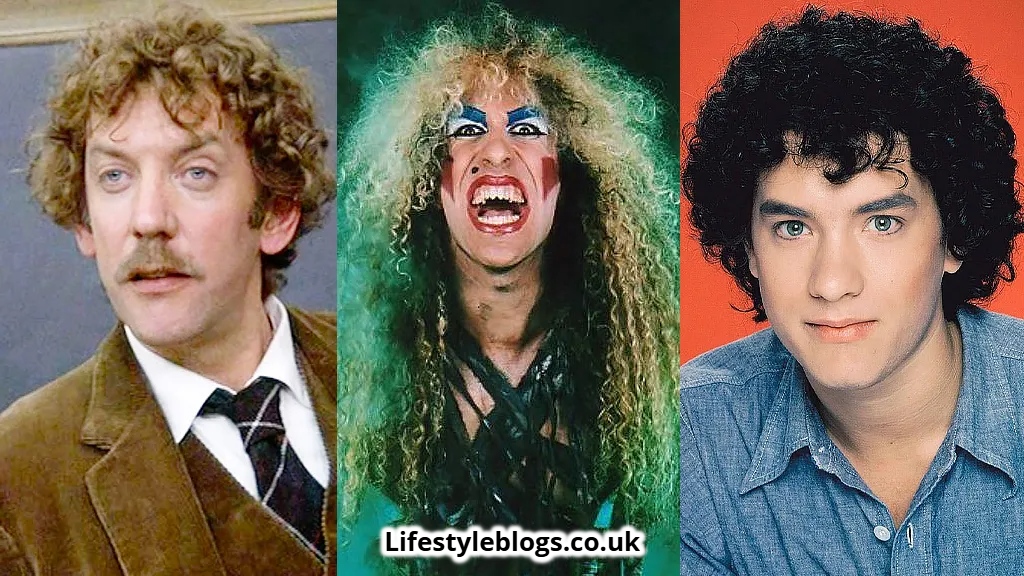
The perm was popular among men in the early-to-mid 80s, particularly in the rock and heavy metal world. Bon Jovi’s enormous, teased hair was the ultimate expression of 80s rock star volume. The principle was simple: bigger was better.
The Flat Top: Hip-Hop’s Contribution to 80s Hair
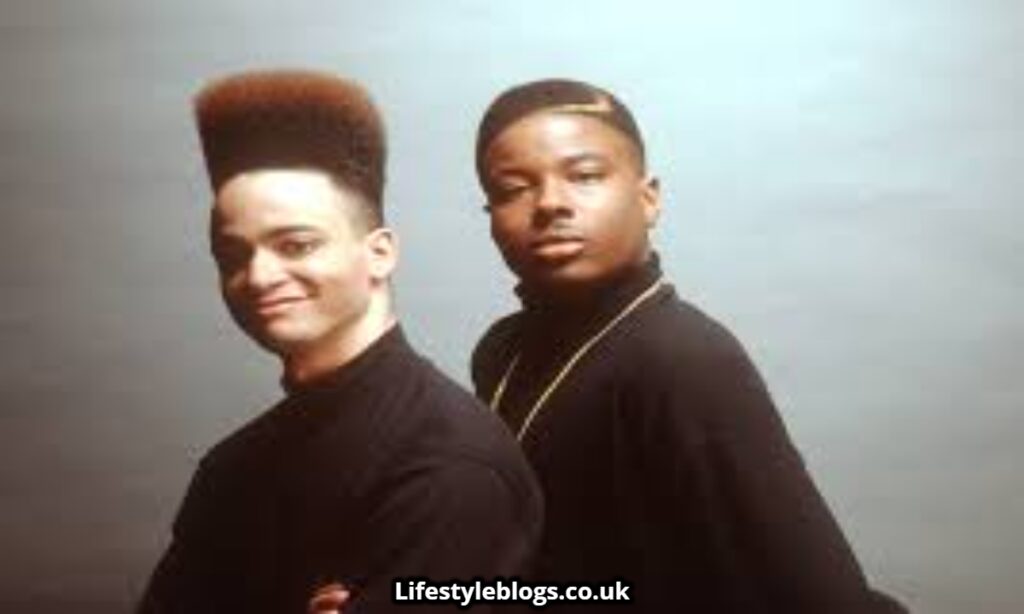
The flat top — hair cut short on the sides with a perfectly level surface on top — was hip-hop culture’s distinctive contribution to 80s men’s hairstyles. It required regular maintenance and communicated a very specific kind of cultural awareness.
13. UK vs USA: How 80s Men’s Fashion Differed Across the Atlantic?
The American Look: Power Dressing, Preppy and Miami Vice
American 80s men’s fashion was shaped by economic confidence, Ivy League tradition, and pop culture explosion. Power dressing reflected the Wall Street boom. The preppy aesthetic referenced aspirational Ivy League lifestyle. Miami Vice showed that cool casual dressing could be as impactful as formal wear. American 80s fashion was broadly optimistic — a culture that believed in the future and in individual achievement.
The British Look: New Romantics, Casuals and Punk Revival
British 80s fashion was more complex and more politically charged. The New Romantics offered theatrical escapism from the social tensions of Thatcher’s Britain. The Casual subculture developed its own code of cool based on quality and subcultural knowledge. The punk revival responded to real political anger.
British men’s fashion in the 80s was simultaneously more experimental and more streetwise than its American counterpart.
British Bands That Shaped Global Men’s Style
British bands were uniquely influential in the 80s because of MTV’s early reliance on UK acts. Duran Duran, Culture Club, The Cure, The Clash, Madness, Spandau Ballet, and Simple Minds all brought distinctly British fashion aesthetics to global audiences. The Second British Invasion of US music was as much a fashion event as a musical one.
Where US and UK 80s Fashion Met?
Despite their differences, American and British 80s fashion shared more than it diverged. Levi’s jeans were universal. Adidas and Nike were worn on both sides of the Atlantic. Leather jackets, bomber jackets, and graphic tees crossed every cultural boundary. MTV meant that American and British acts were consuming each other’s visual culture constantly.
Which Country Had Better 80s Style?
Genuinely debatable. American 80s fashion had greater commercial polish and broader cultural reach. British 80s fashion had greater subcultural depth, more genuine innovation, and produced movements — the New Romantics, the Casual subculture — that had no American equivalent whatsoever. The ideal 80s wardrobe borrows freely from both.
14. How to Build an 80s Wardrobe on a Budget
Shopping for 80s Fashion in the UK
The UK has an excellent infrastructure for 80s vintage shopping, with prices varying considerably depending on the piece, brand, and condition.
Charity shops (Oxfam, British Heart Foundation, Sue Ryder) remain the most budget-friendly option. Basic 80s pieces — polo shirts, graphic tees, casual trousers — can be found for £3 to £15. Beyond Retro, with 13 stores across the UK, specialises in curated vintage and prices most 80s casual pieces between £20 and £60.
Depop UK is the primary destination for Gen Z and millennial buyers. Vintage graphic tees with genuine 80s references regularly sell for £25 to £60 depending on rarity. Band tees, particularly from metal and punk acts, command a premium — £40 to £120 for genuine period pieces. According to Depop sellers interviewed in 2025, vintage tees with rare graphics or pop culture references can sell for £40–£60 or more.
eBay UK vintage is the strongest platform for specific brand pieces. Genuine 80s Levi’s 501s sell for £30 to £80. Adidas tracksuits in original colourways run from £40 to £150 depending on completeness and condition. Stone Island pieces from the 80s are premium collector’s items — expect to pay £150 to £400+ for verified period examples. As ShelfTrend’s 2025 vintage market analysis notes, older vintage from the 60s–80s typically performs better on eBay and specialist platforms than on Depop.
Vinted has grown rapidly as a zero-seller-fee platform and is increasingly competitive for entry-level vintage, with most 80s casual pieces in the £8 to £35 range.
Budget guide at a glance:
| Item | Budget (charity shop/Vinted) | Mid-range (Depop/eBay) | Premium (verified vintage) |
|---|---|---|---|
| Graphic/band tee | £5–£15 | £25–£60 | £60–£120+ |
| Levi’s 501s | £10–£25 | £30–£80 | £80–£150 |
| Bomber jacket | £15–£30 | £40–£100 | £100–£250 |
| Adidas tracksuit | £20–£40 | £50–£150 | £150–£300 |
| Stone Island (80s) | Rare at this price | £150–£250 | £300–£500+ |
Shopping for 80s Fashion in the USA
American thrift stores — Goodwill, Salvation Army, and independent vintage shops — are extraordinarily well-stocked with 80s pieces. Poshmark and Depop are the primary online platforms. For premium vintage, specialist shops in New York, Los Angeles, and Chicago are the most reliable sources.
5 Key Pieces That Cover Every 80s Style
1. Leather or bomber jacket — handles punk, rock, and athleisure simultaneously 2. Polo shirt in a pastel colour — covers preppy and casual 3. Straight-leg jeans in a clean wash — the universal 80s bottom 4. Classic trainers — Adidas Superstars, Converse Chuck Taylors, or Nike Air Force 1s 5. Graphic or band tee — completes every outfit in the set
How to Wear 80s Fashion Without Looking Like a Costume?
The key is proportion and restraint. Wear one 80s piece at a time with contemporary pieces around it. A bomber jacket over a plain white t-shirt with straight-leg jeans and clean white trainers is a 2026 outfit that carries 80s energy — not an 80s costume. The moment you add more than two or three 80s-specific pieces simultaneously, the effect shifts from stylish to costume. Less is more.
15. 80s Men’s Fashion: Quick Style Comparison Guide
| Style | Key Pieces | Icon | Origin | Still Wearable 2026 |
|---|---|---|---|---|
| Power Dressing | Shoulder pad suit, oxford shirt | Richard Gere | US + UK | ✅ Oversized blazer |
| Preppy | Polo shirt, khakis, boat shoes | Ralph Lauren | US | ✅ Fully wearable |
| Punk Rock | Leather jacket, ripped jeans | Billy Idol | UK/US | ✅ Leather jacket |
| New Romantics | Skinny tie, trench coat | Boy George | UK | ✅ Trench coat |
| Hip Hop | Adidas tracksuit, gold chain | Run-DMC | US→Global | ✅ Fully wearable |
| Casual Subculture | Stone Island, Adidas trainers | UK Terraces | UK | ✅ Fully wearable |
| Glam Metal | Leather pants, big hair | Bon Jovi | US | ⚠️ Elements only |
| Athleisure | Windbreaker, varsity jacket | Marty McFly | US + UK | ✅ Fully wearable |
16. Frequently Asked Questions About 80s Men’s Fashion
What did men wear in the 1980s?
Men in the 1980s wore a wide range of styles depending on their subculture and lifestyle. Power dressing — broad-shouldered suits, oxford shirts, and bold ties — defined the corporate world. Casual wear included acid wash jeans, graphic tees, bomber jackets, and tracksuits. Preppy style meant polo shirts, khakis, and boat shoes. Subcultures including punk, hip-hop, and the New Romantics each had their own distinct wardrobe.
What is a Canadian Tuxedo?
The Canadian Tuxedo is the nickname for the combination of a denim jacket worn with matching or coordinating denim jeans — essentially head-to-toe denim. The term is widely thought to have originated as a gentle mockery of the look, though its exact origins are debated.
In the 1980s, it was one of the more polarising style choices of the decade — bold enough to attract attention, relaxed enough to work for casual occasions. Acid wash denim made it even more visually striking.
The Canadian Tuxedo has since been thoroughly rehabilitated and is considered a legitimate and intentional style move in contemporary fashion.
In 2026, the key is to vary the wash and weight between the jacket and trousers so the combination reads as considered rather than accidental.
What is a typical 80s outfit for men?
A typical 80s outfit might be a pastel blazer worn over a coloured t-shirt with white pleated trousers and loafers without socks — the Miami Vice look. Or acid wash jeans with a graphic tee, a bomber jacket, and high-top Converse.
Or a polo shirt with popped collar, chinos, and boat shoes — preppy. The 80s had several typical outfits, not one.
What were the signature 80s colours for men?
Neon brights — electric blue, hot pink, neon green, and fluorescent yellow — were the decade’s most distinctive colours. Pastels — baby pink, powder blue, mint green, and lemon yellow — defined power dressing and preppy style.
Black was the colour of punk, heavy metal, and New Wave. High-contrast combinations — black with electric blue, or hot pink with white — were quintessentially 80s.
Is 80s fashion coming back in 2026?
Yes, and it has been returning gradually for several years. Oversized blazers, bomber jackets, tracksuits, high-top sneakers, and the New Romantics aesthetic are all visible in contemporary menswear in 2026.
The approach is selective rather than literal — taking specific 80s pieces and incorporating them into contemporary wardrobes rather than recreating complete looks head to toe.
What should a man wear to an 80s party?
For an 80s party, the most recognisable options are the Miami Vice look — pastel blazer, t-shirt, white trousers, and loafers — or the rock look with a leather jacket, ripped jeans, band tee, and boots.
For something more accessible, acid wash jeans with a graphic tee, a bomber jacket, aviator sunglasses, and high-top trainers will read immediately as 80s without requiring specialist vintage pieces.
What brands were popular in the 80s?
The most influential brands included Giorgio Armani, Ralph Lauren, Lacoste, and Hugo Boss in designer and premium fashion. For sportswear, Adidas, Nike, Reebok, Puma, and Converse dominated. Levi’s, Calvin Klein, and Jordache defined denim.
Ray-Ban owned sunglasses. Casio and Swatch were the watch brands. Members Only, Alpha Industries, and Kangol had their specific cultural moments.
How was UK 80s fashion different from American 80s fashion?
British 80s fashion was more subcultural and more politically inflected. The New Romantics movement, the Casual subculture, and the punk revival were all distinctly British phenomena with no direct American equivalent.
American 80s fashion was more commercially polished — power dressing, preppy, and the Miami Vice look were all relatively accessible mainstream aesthetics. British fashion required more subcultural knowledge to decode correctly.
What is the New Romantics style?
The New Romantics was a British fashion movement born in the London club scene around 1979. It was characterised by theatrical, androgynous dressing that drew inspiration from historical fashion — Regency dandies, pirates, and Renaissance courtiers — combined with synthetic fabrics, bold makeup, and elaborate hairstyles.
Key figures included Boy George, Duran Duran, Spandau Ballet, and Adam Ant. Its influence on contemporary gender-fluid fashion is significant and ongoing.
The Lasting Legacy of 80s Men’s Fashion
80s men’s fashion trends left a mark on menswear that has never faded. The decade’s willingness to experiment — to wear pastels, to add shoulder pads, to blend sportswear with tailoring, to let musicians define what was cool — established a creative freedom in men’s dressing that we still benefit from today.
The bomber jacket sits in virtually every man’s wardrobe in 2026 because of Top Gun. The tracksuit’s journey from gym to street to luxury was mapped in the 80s. The sneaker culture that generates billions of pounds and dollars annually traces its DNA to Michael Jordan’s first Nike contract — a deal projected to generate $3 million in four years that generated $126 million in twelve months. The New Romantics movement opened conversations about gender and fashion that are more relevant now than they were in 1982.
Whether you take inspiration from American power dressing or British New Romanticism, from hip-hop streetwear or preppy Ivy League tradition, the 80s offers a richer and more diverse wardrobe of ideas than any other decade in fashion history. The best approach in 2026 is the same approach that worked in 1986 — choose the look that genuinely reflects who you are, wear it with conviction, and make it your own.
About The Author
Tahir is the founder and lead writer at lifestyleblogs.co.uk, specialising in fashion history, celebrity style, and menswear. This guide was researched using primary sources including archival fashion magazines, original designer interviews, and period advertising materials from both the US and UK.
For questions or editorial enquiries: Contact Us
Editorial Standards
All articles on lifestyleblogs.co.uk are researched using verified primary and secondary sources. Statistics cited in this article are drawn from Wikipedia, Britannica, Business of Fashion, TIME, NBA.com, and official brand histories. External links have been reviewed for authority and accuracy. Last reviewed: April 2026