

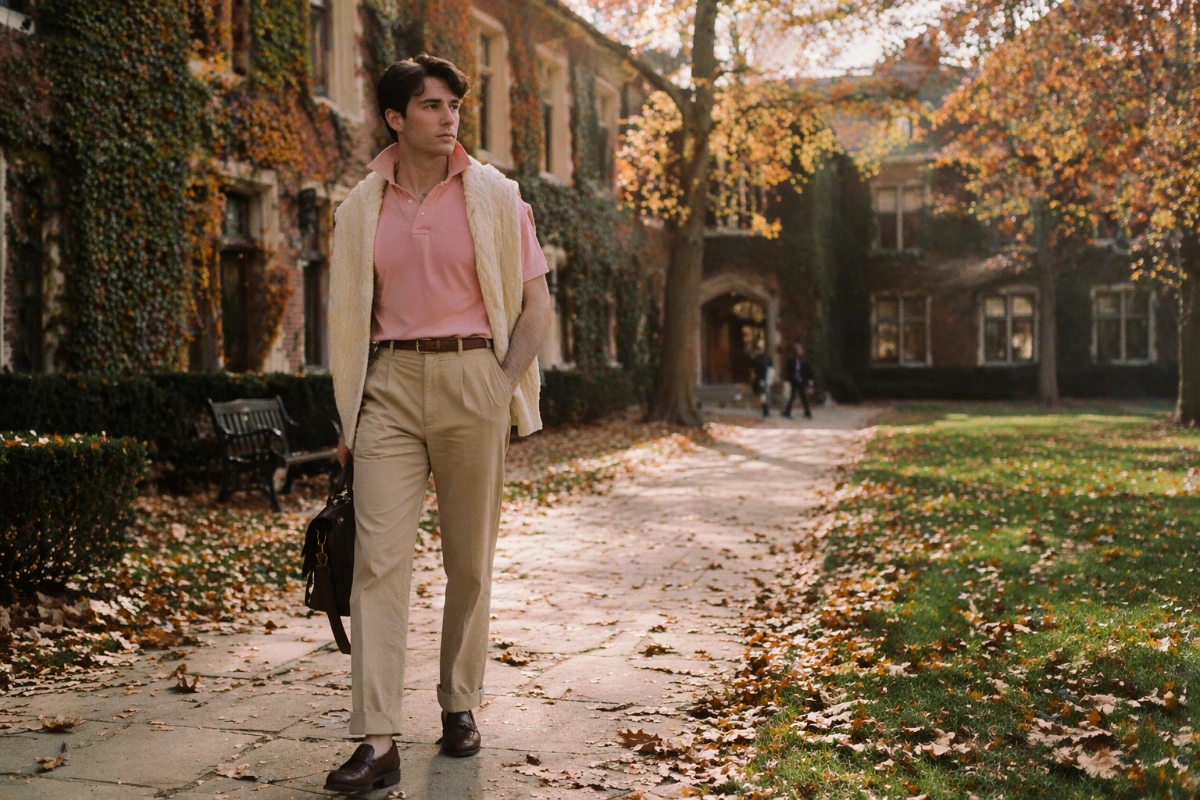
Picture a Saturday morning on a New England campus in 1983. A student crosses the quad in pressed khaki chinos, a pastel pink polo shirt with the collar up, and a cable-knit sweater draped over his shoulders. He is not dressed for a particular occasion. This is the occasion. That image — unhurried, polished, and coded with a specific kind of American privilege — is 80s preppy style for men.
It did not fade when the decade ended. It became a reference point that every generation since has returned to, and in 2026, it is more searchable and more culturally relevant than it has been in decades.
This article breaks down the history of 80s preppy style for men, the key garments that defined it, the brands that built it, and the cultural forces now driving its revival.
From Ivy League Campuses to Mainstream America — A Brief History
The story of 80s preppy style for men does not begin in the 1980s. Its roots reach back to the early 1910s, when students at elite Northeastern universities — Harvard, Yale, Princeton — began adapting traditional British tailoring into something more relaxed and distinctly American.
Sporting attire designed for polo, tennis, sailing, and golf migrated off the playing field and onto campus. The blazer, the Oxford shirt, the khaki trouser — each started as functional sportswear before becoming a social uniform.
By the 1940s, this aesthetic had a name: Ivy League style. Brands like Brooks Brothers and J. Press opened storefronts directly on university campuses, cementing their role as the official outfitters of American collegiate life. Military surplus khaki chinos — worn by returning veterans on the G.I. Bill — entered the Ivy wardrobe during this period and never left.
What changed in 1980 was scale. Lisa Birnbach’s The Official Preppy Handbook, published that year, introduced the preppy subculture to a mass audience with enough wit and specificity to make it aspirational rather than exclusive. Simultaneously, Ralph Lauren was building the Polo brand into something far larger than a clothing label — he was selling a lifestyle, and the polo shirt was its most accessible entry point.
The result was a decade in which 80s mens fashion trends extended far beyond preppy alone — but preppy was its most enduring export, moving from elite campuses to shopping malls across America, from the wardrobes of legacy students to anyone who wanted to signal intelligence, ambition, and a particular kind of effortless refinement.
The Core Pieces That Defined 80s Preppy Style
The 80s preppy wardrobe for men was built on a small number of deliberate pieces. Each one carried its own history. None of them were accidental.
Quick Reference Table: 80s Preppy Style for Men — Then vs. Now
| Garment | 1980s Version | 2026 Interpretation |
|---|---|---|
| Polo Shirt | Piqué cotton, pastel colors, logo at chest, collar popped | Slim-fit piqué polo in muted pastels, collar worn flat or popped |
| Khaki Chinos | High-waisted, straight or slightly wide leg, cuffed hem | Mid-rise straight fit, clean hem, no distressing |
| Oxford Button-Down | Relaxed fit, button-down collar, tucked in | Slightly fitted OCBD, tucked or half-tucked |
| Cable-Knit Sweater | Draped over shoulders, crew neck, solid or argyle | Same silhouette — worn over shoulders or layered |
| Navy Blazer | Gold buttons, school insignia, worn with chinos | Clean gold-button blazer over OCBD, no tie required |
| Loafers | Penny loafers (Bass Weejuns), worn broken-in | Same silhouette — suede or leather penny loafer |
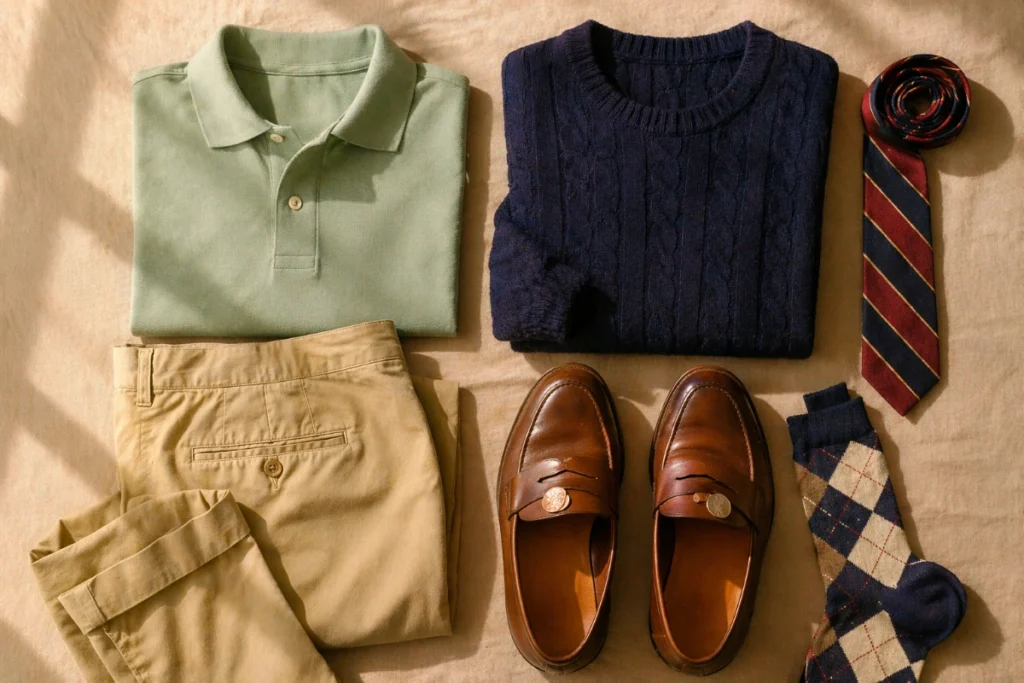
The polo shirt is the most recognizable piece in the 80s preppy wardrobe. René Lacoste first designed the piqué cotton polo for tennis in the 1930s. By the 1980s, Ralph Lauren’s Polo line had transformed it into the defining garment of East Coast aspiration — pastel-colored, logo-forward, and almost always tucked into khakis or slacks.
Khaki chinos entered the preppy wardrobe through military surplus after World War II, when returning veterans brought them to campus. In the 80s, they were pressed, cuffed, and worn with a leather belt — the default bottom for virtually every preppy outfit combination.
The Oxford cloth button-down shirt (OCBD) provided the structured backbone of the look. Its button-down collar — originally developed to prevent polo players’ collars from flapping during matches — became the most reliable signal of Ivy League sensibility.
The cable-knit sweater draped over the shoulders was not casual. It was a calculated styling move — one that communicated enough ease to project a relaxed confidence that could not be faked or rushed.
The Color Palette and Pattern Code
The 80s preppy color palette was deliberately limited and internally logical. Navy, white, khaki, burgundy, and forest green formed the neutral foundation. Pastels — soft pink, mint green, baby blue, coral, and pale yellow — provided the seasonal brightness. The strategic value of this palette was combinatorial: five tops and three bottoms in these colors produced dozens of legitimate outfit combinations without a single clash.
Patterns followed the same logic of restraint within variety. Argyle — the diamond grid pattern seen on sweaters and vests — added collegiate sophistication without disrupting the palette. Madras plaid, a lightweight cotton fabric in multicolor plaid originating from India, was the summer statement piece, typically appearing in shorts or sport shirts.
Regimental stripes on ties and belts signaled club affiliation. Seersucker — a lightweight puckered cotton — handled the warmest months with the same studied ease the rest of the wardrobe projected year-round.
Understanding the pattern code matters because the 80s preppy look was never loud by accident. Every bold choice — a coral polo, a Madras shirt, a pink and green color block — operated within a shared visual grammar that made the wearer legible to others who understood the subculture.
The Shoes That Completed the Look
No element of the 80s preppy wardrobe carried more subcultural weight per square inch than the shoes.
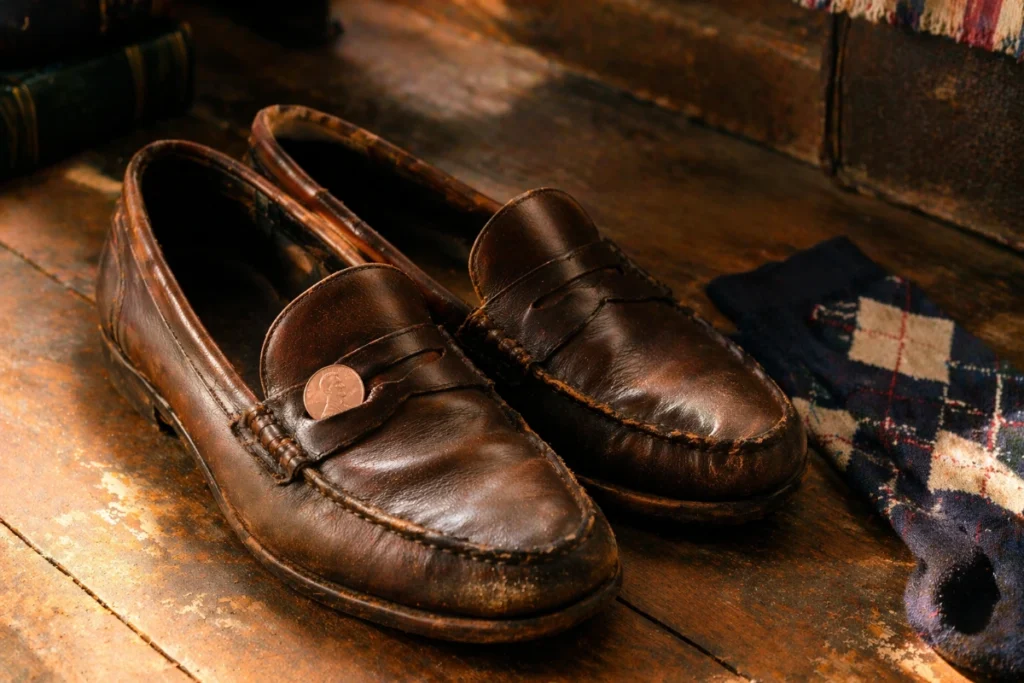
The penny loafer — specifically the Bass Weejun, introduced by G.H. Bass in the 1930s — was the definitive preppy shoe. Modeled on Norwegian angler’s moccasins, it gained a cult following on Ivy League campuses in the 1950s and had never left by the time the 80s arrived.
Preppy lore held that the shoe should look broken-in: shined, but never too shined. The tradition of slipping a penny into the leather strap across the vamp gave the shoe its name and a small piece of American social history.
Boat shoes — particularly the Sperry Top-Sider, designed in 1935 for sailing — handled the summer months. Worn without socks with chino shorts and a striped polo, they carried the nautical codes of Cape Cod and Nantucket weekends into everyday wear.
White bucks — suede Oxford shoes with a rubber sole — completed the warm-weather preppy rotation. Paired with seersucker or madras, they marked their wearer as someone who understood the seasonal specificity of the look.
The Brands Behind the Movement
The 80s preppy look did not emerge spontaneously. It was built by a small group of brands with deep institutional roots.
Brooks Brothers, founded in 1818, is the oldest men’s clothier in the United States and the institution most responsible for codifying Ivy League dressing. It introduced the button-down collar, the sack suit, and the classic Oxford shirt — all of which became preppy cornerstones.
J. Press, founded in 1902 and established directly on the Yale campus, served as the Ivy League’s most doctrinaire outfitter. Its commitment to traditional construction — natural shoulders, minimal padding, undarted jackets — defined what purists meant when they said “Ivy style.”
Ralph Lauren took what Brooks Brothers and J. Press had built and made it global. His Polo brand, launched in 1967, translated Ivy League aspiration into something accessible at scale — elevated enough to feel like arrival, familiar enough to reach a generation of non-legacy aspirants.
His 1980s campaigns, featuring models in navy blazers and creamy chinos against landscapes of horses and estates, did not sell clothes. They sold a version of American life that millions wanted to enter.
Lacoste contributed the polo shirt’s French-American crossover credibility. J. Crew, launched in 1983, democratized the look further — borrowing Ivy attire and making it approachable for a generation of college-bound Americans who had not attended prep school.
It is worth noting that the 80s were not only a preppy decade. How MTV changed men’s fashion forever tells the parallel story — the decade split between the Ivy-coded restraint of preppy culture and the louder, image-driven aesthetics that television was amplifying simultaneously.
Why the 80s Preppy Look Is Back in 2026
Fashion revivals are rarely about nostalgia. They are about the present moment finding answers in the past.
Whenever I study trend revivals through primary sources — the original catalogues, the archived magazine spreads — what becomes clear is that a style returns not because people miss the decade it came from, but because something about that era’s aesthetic answers a question the current moment is asking.
In 2026, the question is about permanence. After years of micro-trend cycles driven by fast fashion and social media velocity, a significant number of style-conscious men are turning toward clothes that do not expire.
The old money aesthetic — which exploded across TikTok and Pinterest between 2023 and 2026, accumulating over one billion views in some content clusters — is the most visible expression of this shift.
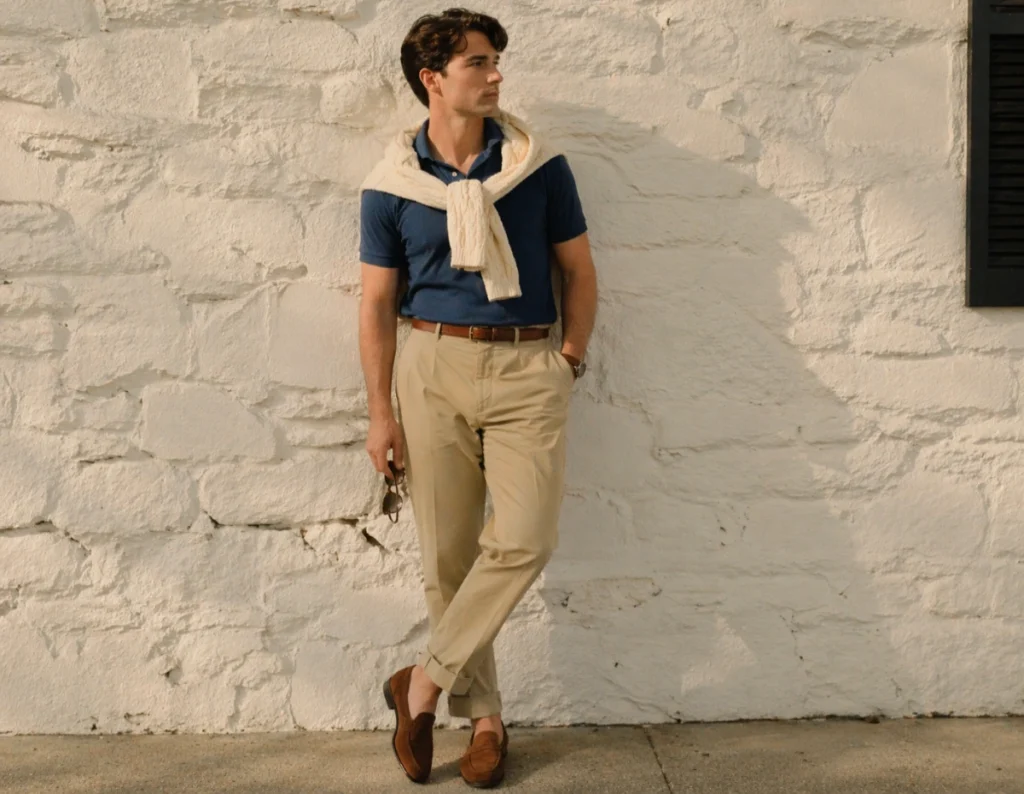
At its core, the old money aesthetic is 80s preppy style stripped of its louder elements: the popped collars and neon accents replaced by the quieter end of the palette, the cable-knit and the navy blazer, the penny loafer worn without announcement. Quiet luxury, the parallel trend that dominated runway coverage in the same period, operates on the same logic.
For a full breakdown of how this revival is playing out across menswear right now, the 80s mens fashion comeback in 2026 maps the specific garments and subcultures leading the resurgence.
The 80s preppy look survives every revival because its grammar is internally consistent. A man who understands the palette, the silhouette, and the cultural weight of each piece does not need new clothes each season. That is, and always has been, the point.
Frequently Asked Questions
What is 80s preppy style for men?
80s preppy style for men is a fashion aesthetic rooted in Ivy League campus culture, characterized by polo shirts, khaki chinos, Oxford button-down shirts, cable-knit sweaters, navy blazers, and loafers in a palette of pastels and classic neutrals. It reached mainstream popularity in the early 1980s, accelerated by Lisa Birnbach’s The Official Preppy Handbook (1980) and Ralph Lauren’s Polo brand, and remains a reference point in contemporary menswear through the old money aesthetic revival.
Is preppy style the same as Ivy League style?
Preppy style and Ivy League style share the same roots but are not identical. Ivy League style — which emerged in the 1950s and 1960s — is more restrained: natural shoulders, muted tones, minimal branding, and a preference for classic tailoring. Preppy style, as it developed in the 1980s, kept those foundations but added brighter pastels, more visible logos, and a louder color palette. Today, the line between the two is blurred, with most style guides using the terms interchangeably.
What shoes do you wear with a preppy outfit?
The three canonical shoes for a preppy outfit are penny loafers, boat shoes, and white bucks. Penny loafers — particularly the Bass Weejun — are the most versatile and appropriate for nearly any preppy combination, from chinos and an Oxford shirt to a full blazer ensemble. Boat shoes work for casual summer outfits paired with shorts and a polo. White bucks are reserved for warmer months and look strongest with seersucker or madras patterns.
How do I wear 80s preppy style in 2026 without looking like a costume?
The key is restraint and proportion. Choose one or two defining preppy pieces — a well-fitted polo, a classic khaki chino, or a navy blazer — and build around them in modern silhouettes. Avoid wearing every preppy signal at once: no popped collar, draped sweater, and penny loafers simultaneously unless the context specifically calls for it. The 2026 interpretation of preppy leans toward the quieter end of the palette — navy, white, khaki, and muted pastels — rather than the louder coral and bright green combinations that defined the height of the 1980s trend.
Conclusion
The 80s preppy look for men has outlasted every trend cycle that tried to replace it because it was never really about fashion. It was about a set of sartorial values — quality materials, restrained color logic, garments with traceable histories — that do not date. Ralph Lauren understood this when he built Polo not as a brand but as a world. Brooks Brothers understood it in 1818. The men who wore Bass Weejuns to Harvard in 1983 understood it too.
In 2026, that understanding is being rediscovered by a new generation who want clothes that say something without shouting. The polo shirt, the khaki chino, and the penny loafer are still saying it.
Zubair Ahmed is the founder and lead writer at lifestyleblogs.co.uk, a vintage menswear specialist and fashion researcher with five years of primary source research experience across US and UK markets.
