

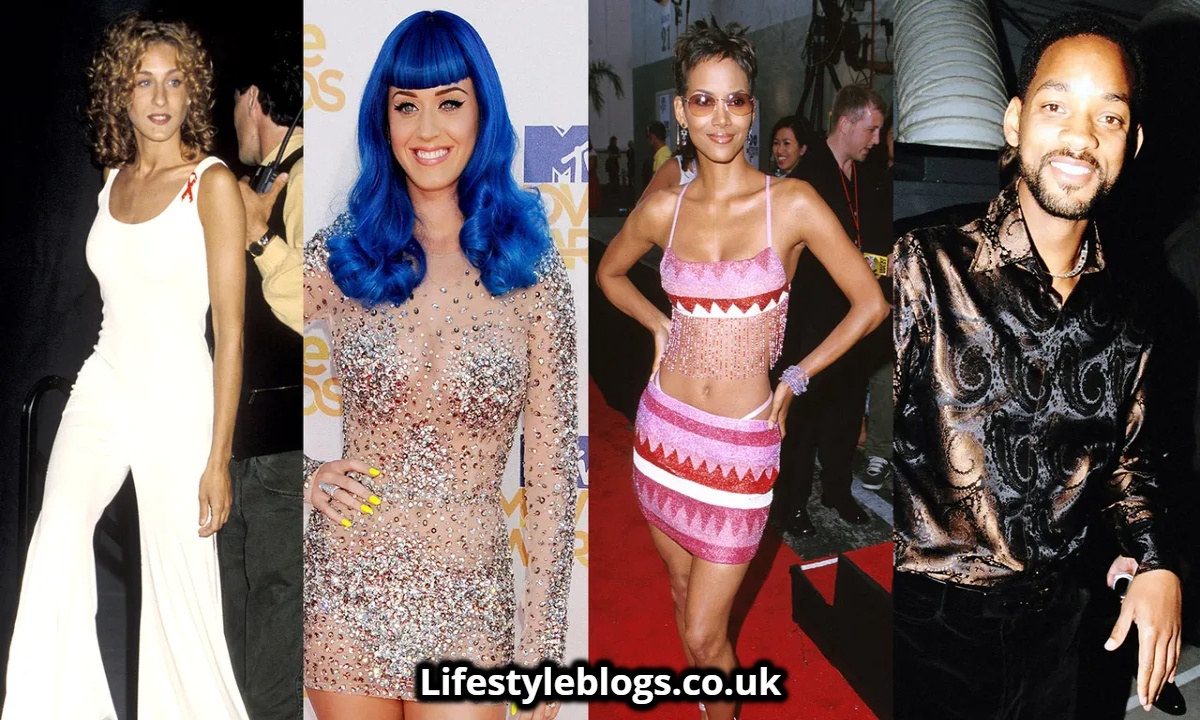
There is a moment in fashion history that most people overlook, because it did not happen on a runway.
It did not happen in a designer’s studio or a glossy magazine spread. It happened at 12:01 in the morning on August 1, 1981, in a modest cable office in Fort Lee, New Jersey. A rocket launched on screen. An announcer said the words “Ladies and gentlemen, rock and roll.” A song called “Video Killed the Radio Star” began to play.
MTV was live.
Within a decade, that single broadcast had changed not just how men consumed music — but how they dressed, what they bought, and who they wanted to become. No fashion show, no magazine editor, and no advertising campaign had ever moved men’s style as fast, as broadly, or as permanently as a cable channel that most people initially dismissed as a novelty.
This is the story of how that happened.
Before MTV, Fashion Moved Slowly
To understand what MTV did, you first need to understand what the world looked like before it.
In 1980, a musician’s look was a slow-moving thing. You might catch it on the cover of a magazine, if the magazine happened to feature that artist that month. You might see it at a concert, if you lived near a major city and could afford the ticket. Otherwise, music was invisible. It lived in your ears, not your eyes.
The connection between what an artist wore and what their audience wore was real — but it was delayed, filtered, and limited by geography. A look that originated in a London club in January might reach someone in a small town six months later, softened and diluted by the time it arrived.
MTV eliminated every one of those barriers simultaneously.
For the first time in history, a 24-hour channel existed purely to show music as a visual experience. When a musician appeared on MTV wearing a specific jacket, or a particular cut of trouser, or a pair of sunglasses that nobody had paid much attention to before — millions of people saw it. And they kept seeing it, because that is what heavy rotation does. It turns a single image into a cultural fixture.
Cultural scholar Susan J. Douglas captured the dynamic precisely in her book Listening In: Radio and the American Imagination: “MTV didn’t just reflect cultural change — it manufactured it.”
That is the key distinction. MTV was not a mirror held up to existing fashion trends. It was a machine that created them. And once you understand that mechanism, everything that followed — from Duran Duran’s trench coats to Run-DMC’s unlaced Adidas — starts to make complete sense.
The British Invasion That MTV Made Possible
Here is something most fashion writing about MTV gets wrong, or simply skips over: in its earliest months, MTV had a serious content problem.
American bands, by and large, did not have music videos. The format barely existed domestically in 1981. When MTV launched and needed material to fill a 24-hour schedule, the only artists who had already been making sophisticated, cinematic promotional videos were British.
The BBC had been running Top of the Pops since 1964. British acts had been producing polished visual clips for years. When MTV went looking for content, British record labels sent over entire libraries of ready-to-broadcast material. Many American labels had almost nothing comparable to offer.
The result — documented in Wikipedia’s account of the Second British Invasion — was something nobody in the music industry had predicted. When MTV became available in a new cable market, record sales for British acts on the channel increased immediately. Radio stations started receiving calls requesting songs that had never been played on air — songs listeners had only ever encountered visually, through MTV.
By July 16, 1983, twenty of the top forty singles on the charts were British. The previous record had been fourteen, set during the Beatles era in 1965. Rolling Stone documented how England had swung again. Newsweek put Annie Lennox and Boy George on its cover with the headline: “Britain Rocks America — Again.”
What did this mean for men’s fashion?
Nina Blackwood, one of MTV’s original on-air VJs, described watching Adam Ant and Duran Duran arrive at the MTV studio within a month of each other — men who looked like nothing American television had ever produced. Not handsome in a conventional sense, but carefully, deliberately put together. Wearing makeup with complete confidence. Dressed in ways that had no equivalent anywhere in mainstream culture at the time.
For men who had grown up watching rock bands in denim and flannel, this was a genuine visual shock. And when a visual shock arrives through a medium you watch every single day, it has a way of becoming the new normal very quickly.
Duran Duran: The Band That Proved MTV Could Make Fashion
No band in history better illustrates what MTV did to men’s fashion than Duran Duran.
In 1982, they had zero radio airplay in America. The band had built a following in the UK through the New Romantic scene — a theatrical movement born in London’s club circuit where the dress code was essentially “extraordinary or you are not getting through the door.
” Their look had been developed entirely in that environment: skinny ties, tailored trench coats, fedora hats, and a precision about personal presentation that most men outside London had never encountered.
Then their video for “Hungry Like the Wolf” landed on MTV’s desk.
Les Garland, MTV’s senior executive vice-president, recalled the moment clearly. A colleague burst into his office saying he had to see something immediately. “Duran Duran were getting zero radio airplay at the time,” Garland said. “MTV wanted to try to break new music. ‘Hungry Like the Wolf’ was the greatest video I’d ever seen.”
The video went into heavy rotation. Filmed in Sri Lanka, it looked like a miniature adventure film — completely unlike anything American acts were producing. By early 1983, the single had climbed to number three on the charts, driven almost entirely by MTV.
As CBS News documented in their retrospective on 1983, the British acts that arrived through MTV brought with them a “revolution in sound and style” that audiences had no prior frame of reference for.
What Duran Duran and their contemporaries taught men — through MTV’s constant visual presence — was something no other medium could have delivered: that style was a statement of intent. That how you dressed told the world something specific about who you were.
That attention to personal presentation was not vanity — it was communication. Men watching absorbed that lesson whether they were conscious of it or not.
For a complete picture of how the New Romantic movement sat alongside every other 80s style — from power suits to tracksuits — the 80s Men’s Fashion Trends guide maps the full landscape of the decade’s wardrobe in detail.
The Night Michael Jackson Forced MTV to Change
By late 1982, MTV had a problem of a different kind.
Almost by default, the channel had become a rock channel. Its programmers were veterans of 1970s rock radio — a format that, as hip-hop journalist Dan Charnas has documented, had developed along racially segregated lines. Those same programming instincts carried directly into MTV’s early years. Black artists were being systematically excluded from the playlist.
Then Thriller arrived.
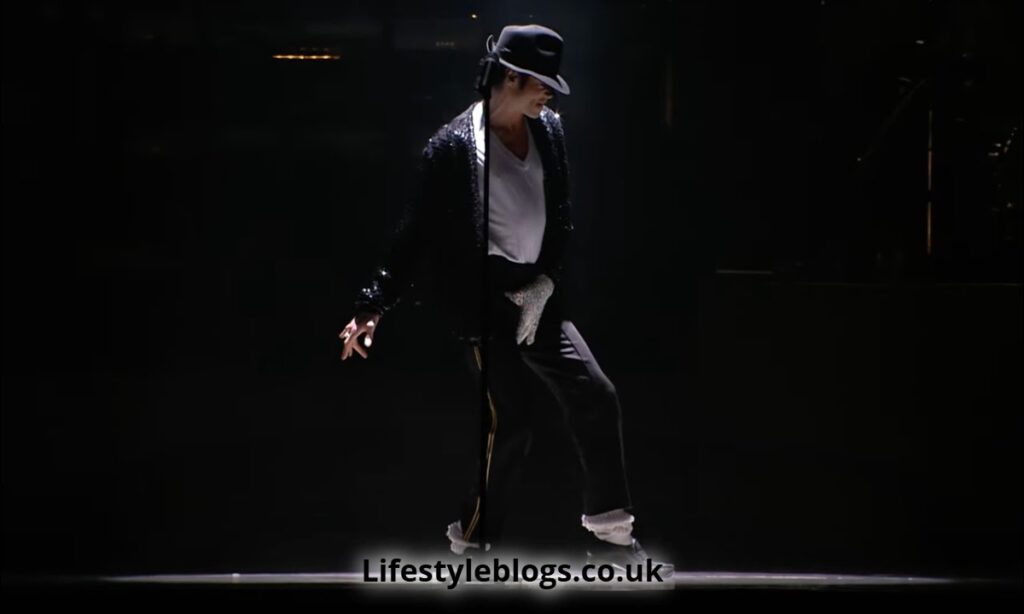
Michael Jackson’s album had been released in November 1982. The music was extraordinary. But it was the videos — particularly “Billie Jean” and the short film for the title track — that represented a creative and commercial force so powerful that MTV eventually had no choice but to respond. After sustained industry pressure, Jackson’s videos entered rotation.
The response was immediate and enormous.
As Encyclopaedia Britannica documents in its account of MTV, singles from Thriller “not only showcased the strengths of the music video format but proved that exposure on MTV could propel artists to superstardom.” Thriller became the best-selling album of all time.
And the red leather jacket Michael Jackson wore in the video — designed by costume designer Deborah Nadoolman Landis, with angular shoulders and bold black detailing — became, according to Wikipedia’s verified account of the Thriller jacket, “the hottest outerwear fad of the mid-1980s.”
One of the two original jackets made for the production sold at auction in 2011 for $1.8 million. Lady Gaga, who bought it, described it as “the greatest piece of rock and roll memorabilia in history.”
The fashion consequences of Thriller extended far beyond a single jacket, though. By forcing MTV to diversify its playlist, Michael Jackson opened the channel to Black artists and Black fashion — a shift whose consequences for men’s style would become fully visible within just a few years.
Run-DMC and the Birth of Streetwear
The first rap video ever broadcast on MTV was Run-DMC’s “Rock Box,” in the summer of 1984. Their look was unlike anything the channel had shown before — no theatrical costumes, no tailored suits, no rock star excess. Just black Kangol hats, black Lee jeans, white Adidas Superstars worn without laces, and gold chains. The clothes they wore on the streets of Hollis, Queens.
As Wikipedia’s entry on Run-DMC records, it was this group that introduced untied sneakers, gold chains, and that entire visual language to a young suburban rock audience that had never encountered it before. They did it through MTV — and the visibility the channel gave them turned a street aesthetic into a global one.
The full story of how that MTV exposure led to hip-hop’s first major brand partnership belongs in its own telling — but the starting point was always that first video, on that channel, reaching an audience that had no idea what was coming.
Yo! MTV Raps — When Hip-Hop Fashion Went Global
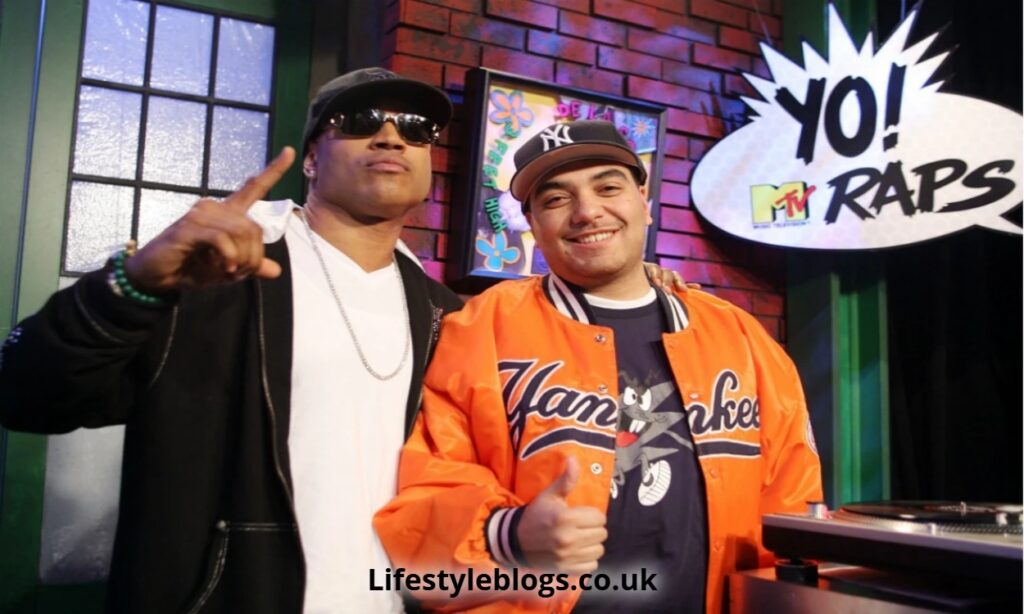
In the mid-1980s, hip-hop fashion was still largely regional. The look that Run-DMC had defined — the Kangol hats, the tracksuits, the unlaced sneakers, the gold chains — was established in New York, growing in Los Angeles, and spreading through record stores and word of mouth. But it had not yet become a global uniform.
That changed on August 6, 1988, when Yo! MTV Raps aired its pilot episode.
As NPR’s detailed account of the show’s history documents, the pilot was one of the highest-rated programmes ever to air on MTV at that point — exceeded only by the Video Music Awards and Live Aid. MTV executives had doubted hip-hop’s mainstream appeal. The ratings answered that question instantly and permanently.
Hosted by Fab 5 Freddy, and later by Ed Lover and Doctor Dré on weekdays, Yo! MTV Raps did something no platform had previously managed: it showed audiences across the country — and through MTV’s international networks, across the world — not just what hip-hop sounded like, but what it looked like.
Every week, viewers saw exactly how their favourite rappers dressed, what brands they wore on stage, and how they carried themselves off it.
Oversized clothing, branded sportswear, gold jewellery, and the full visual language of hip-hop culture went from being the wardrobe of a few major cities to being the dominant casual fashion of an entire generation. The show ran until 1995.
By the time it ended, the styles it had broadcast into living rooms around the world had permanently reshaped the fashion industry’s relationship with streetwear — a relationship that has only grown stronger in the decades since.
The Numbers That Prove MTV’s Fashion Power
If you want one concrete example of what MTV-era visual culture did to men’s fashion, Ray-Ban tells the story precisely. In 1981, the brand was selling 18,000 pairs of Wayfarer sunglasses annually and considering discontinuing the line entirely.
After Tom Cruise wore them in Risky Business in 1983 — a film that circulated constantly through MTV culture — annual sales reached 360,000 pairs that year alone. By 1987, following appearances across MTV-era films and television, that number had climbed to 1.5 million pairs per year.
From 18,000 to 1.5 million. That is what MTV visibility did to a single product — and Wayfarers were just one of hundreds.”
What MTV Did That No Other Medium Could?
Looking back now, it is easy to take for granted the idea that musicians are style icons and that what artists wear shapes what their audiences wear. That connection feels obvious. It was not obvious before MTV — and it did not happen automatically. It happened because MTV created specific conditions that fashion had never had access to before.
Repetition built desire. A look seen dozens of times creates a different kind of wanting than a look seen once. Heavy rotation did not just expose men to new styles — it made those styles feel familiar, achievable, and worth pursuing.
Speed collapsed distance. A trend that originated in a London club or a New York neighbourhood reached a viewer in a small town within days, not months. The gap between subculture and mainstream, which had always been measured in seasons, started being measured in weeks.
Genre crossing created unexpected influence. MTV played everything on the same channel. A viewer who tuned in for rock encountered New Romantic style. A viewer who came for pop saw hip-hop fashion. Nobody chose to be influenced by styles outside their genre — but the channel made that influence unavoidable.
Aspiration became tangible. Men did not just want the music. They wanted to inhabit the world the video created. The jacket, the sunglasses, the haircut — these were the pieces of that world they could actually reach out and acquire.
The world watched at the same time. Through MTV Europe, launched in 1987, and its subsequent international networks, the same fashion signals arrived in cities around the world simultaneously. For the first time, a young man in Manchester and a young man in Miami were watching the same video, seeing the same clothes, on the same day.
The Legacy That Never Left
MTV’s dominance as a music video channel faded through the 1990s and was largely gone by the mid-2000s. YouTube arrived in 2005. TikTok followed. Instagram made every musician their own broadcaster. The specific channel became irrelevant.
But the mechanisms it invented never went away. They simply migrated.
When you watch a music video today and find yourself noticing the artist’s jacket, that is MTV’s legacy. When a brand sells out within hours of appearing in a hip-hop video, that is MTV’s legacy. When a fashion trend moves from a subculture to the mainstream in a matter of weeks rather than years — that, too, is MTV’s legacy.
The men’s fashion that MTV helped build throughout the 1980s did not just define a decade. It established the template for how visual media and personal style would work together from that point forward. The channel is quiet now. The mechanisms it built are louder than ever.
For the complete guide to every major 80s men’s style — from New Romantic trench coats and power dressing to hip-hop streetwear and the Casual subculture — read the 80s Men’s Fashion Trends: The Complete Style Guide.
